
Cycling Cadence: Find a Comfortable Pedaling Rhythm
On this page
Quick answer
Cycling cadence is how quickly the cranks turn, usually described as revolutions per minute. A useful cadence feels smooth, controlled, and sustainable for the terrain and effort. There is no universal target for every rider. Use gears to avoid grinding a very heavy ratio or bouncing in one that feels too light, and change rhythm gradually while watching comfort, breathing, and control.
Cadence describes pedal-turning rate, while speed describes how fast the bicycle travels. The same cadence can produce different speeds depending on gear, wheel size, slope, wind, and surface. Power and effort also depend on how much force is applied to each turn.
What cycling cadence is
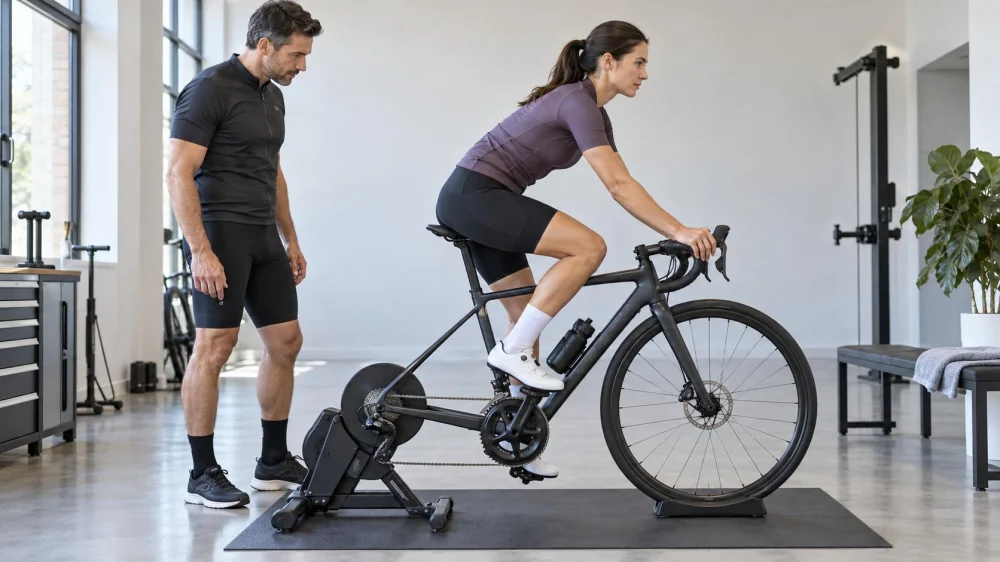
One revolution occurs when a crank completes a full circle. A bike computer or sensor can display cadence, but riders can also estimate it by counting one knee’s rises or one pedal’s passes for a short timed interval. Do this only where looking at a timer will not distract from riding; an indoor trainer is safer for focused measurement.
Cadence is useful because it gives language to a sensation. Slow, forceful pedaling may feel like pushing or “grinding.” Very fast pedaling may feel light but uncoordinated. Between those extremes is a range where the rider can hold posture, keep the feet connected to the pedals, and respond to the road.
Why there is no perfect number
Comfortable cadence varies with experience, fitness, joint history, bicycle fit, crank length, terrain, fatigue, riding style, and the goal of the session. A short climb, technical trail, easy commute, and long steady ride do not demand one identical rhythm.
Published averages or professional-rider habits are not personal prescriptions. Elite cyclists have training, equipment, and workloads that may not resemble recreational riding. The better question is whether your cadence supports a controlled effort without avoidable strain or loss of technique.
New pain, numbness, joint irritation, or repeated difficulty maintaining control should prompt a review of bicycle fit, gearing, workload, and health with qualified professionals. Cadence alone cannot fix an unsuitable bike or injury.
How to notice your rhythm
On a flat, low-traffic route or indoor trainer, ride at an easy effort and observe:
- Whether your hips stay stable rather than rocking on the saddle.
- Whether the upper body remains relaxed and steering stays quiet.
- Whether pressure feels continuous instead of stomping in separate strokes.
- Whether breathing matches the planned effort.
- Whether you can shift before the pedals become suddenly heavy.
A cadence display can confirm patterns, but staring at it reduces awareness. Glance only when conditions are safe, or review recorded data after the ride.
A gradual cadence practice
Use an easy environment and keep changes small:
- Warm up at a natural, conversational effort.
- Observe your normal cadence without trying to correct it.
- Shift one gear lighter and gently increase leg speed for a short interval.
- Stop increasing when hips bounce, feet lose control, or effort becomes inappropriate.
- Return to a comfortable rhythm and recover fully.
- Repeat only while movement stays smooth and pain-free.
The goal is coordination, not chasing a maximum number. Longer intervals or harder efforts belong in a plan appropriate to your condition and riding goals. Avoid sudden high-cadence drills in traffic or on technical terrain.
Use gears as terrain changes
Shift before a hill steepens so the drivetrain is not under an abrupt heavy load. On rolling terrain, look ahead and make small changes early. If pedals become too easy on a descent, prioritize stable position, braking, and road awareness rather than forcing leg speed beyond control.
Off road, cadence may change quickly because traction and obstacles determine when power can be applied. A slightly easier gear can help maintain traction, but spinning too fast may reduce control. Choose the gear that supports the next section, not a fixed display number.
If the bicycle lacks a suitable usable range or shifts poorly, have its fit and drivetrain inspected. Do not compensate for a mechanical problem by forcing the pedals.
Limitations and important notes
This article provides general skill guidance, not medical advice or a training prescription. Stop riding for chest pain, faintness, severe shortness of breath, sudden weakness, or another emergency symptom and seek appropriate help. For persistent joint or muscle pain, consult a qualified healthcare professional and consider a reputable bike fit.
Practice away from traffic and hazards. Outdoor conditions require attention to vehicles, people, surface, signals, and route; cadence data is secondary.
Sources and evidence notes
This guide reflects broad cycling-coaching principles: cadence interacts with gear, force, terrain, fit, and experience; efficiency and comfort are individual; and coordination changes should be gradual. It deliberately avoids one universal RPM target.
Frequently asked questions
Do I need a cadence sensor?
No. It can help measure patterns, but smooth movement, appropriate effort, and safe attention matter more. An indoor count can provide a basic estimate.
Is a higher cadence always better?
No. Too high can waste energy or reduce control, while too low in a heavy gear can feel forceful. The useful range depends on the rider and situation.
Why do my hips bounce when I pedal faster?
The rhythm may exceed your current coordination, or fit and resistance may contribute. Slow down, add slight resistance if appropriate, and review fit if it persists.
Should cadence stay constant uphill?
Not necessarily. Shift early and aim for a manageable rhythm, but slope, gears, traction, and fitness may change cadence.
Can cadence solve knee pain?
Do not treat cadence as a diagnosis. Pain can involve fit, workload, technique, health, or injury and deserves qualified assessment when persistent.
Conclusion and next steps
Use cadence as feedback, not a score. Observe your natural rhythm, practice small changes in a safe setting, and use gears to keep pedaling smooth as conditions change. Comfort, control, and sustainable effort are more useful than copying one target number.

 Trek Bicycle Lake Mary4.0 (431 reviews)
 Spearhead Bicycle Excellence4.0 (7 reviews)
 Shift Bicycle4.0 (53 reviews)
 Atomic Cycles4.0 (139 reviews)
 Main Street Cyclery4.0 (93 reviews)
 Action Wheels Bike Shop4.0 (156 reviews)
 How to Teach Kids to Ride a Bike: A Step-by-Step Guide for Parents
 Tips for Riding on Busy City Streets: Smart Strategies for Urban Cyclists
 Best US National Parks for Mountain Biking: Ride Epic Trails Across America
 Best Aero Helmets for Time Trials and Racing
 How to Clean and Lubricate Your Bike Chain Like a Pro
 10 Must-Have Items for Long-Distance Cycling Trips