
Bike Trail Etiquette: Passing, Yielding, and Shared Space
On this page
- Quick answer
- Know what kind of trail you are using
- Pass only when it is safe
- Understand yielding without assumptions
- Manage groups, stops, and intersections
- Adapt to people, animals, and conditions
- Limitations and important notes
- Sources and evidence notes
- Frequently asked questions
- Conclusion and next steps
Quick answer
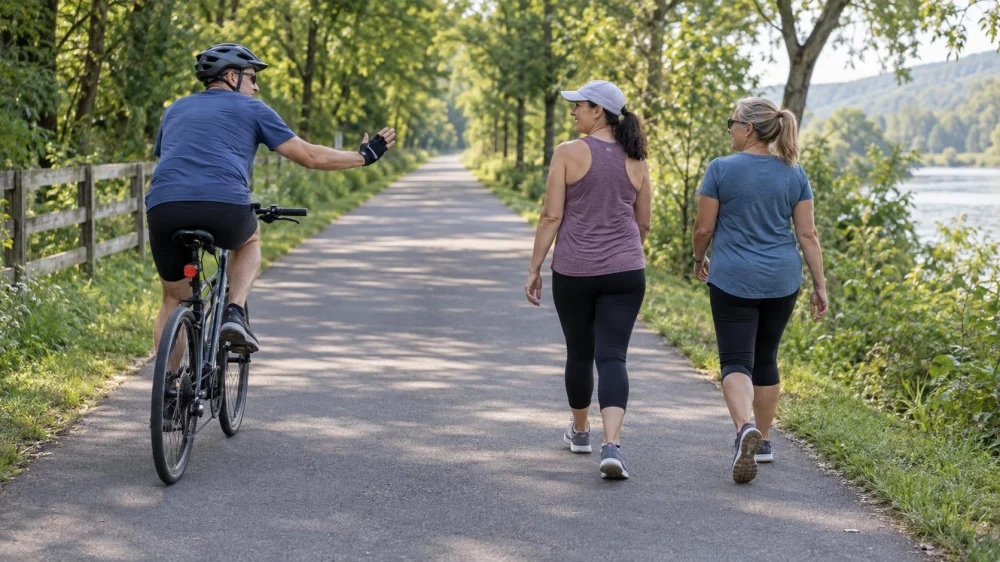
On a shared trail, ride at a speed that lets you stop within the visible clear distance. Keep to the designated side, yield as posted, slow before blind corners and congestion, and pass only after giving a polite audible signal and receiving enough space. Leave a wide margin around children, dogs, horses, and unpredictable users, and move completely off the travel lane when stopping.
Trail etiquette combines posted rules with predictable, courteous behavior. A paved shared-use path, rail trail, bike-only trail, and natural-surface multi-use trail can have different direction, speed, yielding, and access policies. The signs and land manager’s current rules control.
Know what kind of trail you are using
Before riding, check allowed users, direction, hours, closures, surface, intersections, and whether electric bicycles are permitted. Some trails separate walking and riding lanes; others share one narrow corridor. Yield symbols may assign responsibility among cyclists, pedestrians, and equestrians.
Do not treat a speed limit as a target. Visibility, width, wet leaves, loose gravel, bridges, tunnels, wildlife, and crowds may require a much slower pace. If the route is too busy for the ride you planned, choose a quieter time or different location.
Pass only when it is safe
A safe pass requires sight distance, width, a stable surface, and cooperation. Use this sequence:
- Look ahead and behind; do not begin near a blind turn, crest, intersection, gate, or narrow bridge.
- Reduce speed early and leave following distance.
- Give a calm bell or voice signal with enough time to be understood.
- Wait for a clear response or visible stable line; do not assume the other person heard you.
- Pass with generous space at low relative speed.
- Return smoothly only after clearing the person or group.
A signal is a request, not a command. If space does not open, wait. Repeated loud ringing, shouting at the last second, or squeezing through can startle people into your path.
Understand yielding without assumptions
Yielding means reducing speed and being prepared to stop so another user can proceed safely. Follow local signs at crossings, driveways, trail junctions, and road intersections. A marked trail crossing does not guarantee that motor traffic will stop.
On natural-surface trails, common conventions may give uphill users or horses priority, but local rules vary. When meeting a horse, slow or stop, speak calmly so the animal recognizes a person, and follow the rider’s direction. Do not pass closely or silently.
Even when you believe you have priority, avoid a collision. Make eye contact when possible and communicate simply rather than debating right of way in motion.
Manage groups, stops, and intersections
Ride single file when others need room. Do not cover the full trail or follow so closely that one rider’s stop causes a pileup. Before slowing or turning, check behind and communicate in a way the group understands.
Stop on a durable area completely beyond the travel lane, without blocking gates, ramps, benches, or sightlines. At intersections, regroup after crossing rather than waiting in the conflict zone. Never place a bicycle across the path.
When entering from a side path or parking area, yield to established traffic and merge at a controlled speed. Expect people to step from trailheads and parked vehicles.
Adapt to people, animals, and conditions
Children may change direction suddenly. Dogs can cross the trail even on a leash. Give both extra space and pass at walking speed when needed. Do not ride between a person and their dog or through a leash.
Users may have limited hearing, vision, balance, mobility, or language access. A lack of response is not permission to pass closely. Slow down and wait for clear space. Keep lights aimed to provide visibility without blinding others, especially in tunnels and at night.
Protect the trail by respecting closures and avoiding skidding around people or on fragile surfaces. Pack out waste and do not create unauthorized bypass lines.
Limitations and important notes
This article is general U.S. trail guidance, not a statement of local law. Traffic rules, e-bike classes, speed limits, yielding, and access vary by jurisdiction and property. Consult the responsible agency.
Wear appropriate safety equipment, keep the bicycle controllable, and stop for a mechanical problem. In an emergency, move out of traffic if possible, warn others, and contact local help.
Sources and evidence notes
This guide reflects common shared-trail safety principles: control speed, keep a predictable line, signal before passing, yield as posted, leave room for vulnerable users, and stop outside the travel lane. Local signs and current conditions take priority.
Frequently asked questions
Should I use a bell or my voice?
Use an audible signal that is legal and likely to be understood. A bell can be consistent; a calm voice can add direction. Signal early and slow regardless.
What if someone wears headphones?
Assume they may not hear. Reduce speed, wait for enough width and visible awareness, and never pass closely at speed.
Can I pass on the right?
Follow local rules and trail markings. On many U.S. shared paths, passing occurs on the left, but unusual layouts may differ.
How fast should I ride near walkers?
No single speed fits every trail. Use a low relative speed that allows a safe stop and a wide, non-startling pass.
Where should a group regroup?
Choose a durable area fully off the travel lane and beyond intersections, gates, bridges, and blind corners.
Conclusion and next steps
Before riding, learn the trail’s users and rules. On the route, control speed for visibility, communicate early, wait for genuine passing space, and give extra room to people and animals. Predictable riding and patient choices make shared space work better than asserting priority.


 Trek Bicycle Lake Mary4.0 (431 reviews)
 Spearhead Bicycle Excellence4.0 (7 reviews)
 Shift Bicycle4.0 (53 reviews)
 Atomic Cycles4.0 (139 reviews)
 Main Street Cyclery4.0 (93 reviews)
 Action Wheels Bike Shop4.0 (156 reviews)
 How to Teach Kids to Ride a Bike: A Step-by-Step Guide for Parents
 Tips for Riding on Busy City Streets: Smart Strategies for Urban Cyclists
 Best US National Parks for Mountain Biking: Ride Epic Trails Across America
 Best Aero Helmets for Time Trials and Racing
 How to Clean and Lubricate Your Bike Chain Like a Pro
 10 Must-Have Items for Long-Distance Cycling Trips