
Bike Chain Skipping: Safe Checks Before You Ride
On this page
Quick answer
If a bicycle chain skips under pedaling load, stop riding hard and inspect the drivetrain while the bike is stationary. Check for a damaged, stiff, dirty, dry, or incorrectly routed chain; worn teeth; loose components; and shifting misalignment. A chain that jumps, jams, drops repeatedly, or follows a crash needs repair before traffic, descents, standing efforts, or technical terrain.
This guide helps U.S. riders describe and inspect a skipping drivetrain. Bicycle designs vary, and adjustment or replacement should follow manufacturer information or a qualified mechanic's assessment.
Describe the symptom accurately
“Skipping” can mean several things. The chain may climb toward another rear sprocket and return, jump forward over worn teeth under pressure, drop off a chainring, hesitate on a stiff link, or slip because an internal hub or freehub mechanism is not engaging properly.
Record when it happens: one gear or many, front or rear shifting, seated or standing, light or heavy pressure, after a shift, after cleaning, or following a wheel removal or impact. A precise pattern helps avoid replacing parts based on guesswork.
Do not reproduce the symptom with a hard sprint. A sudden loss of pedal resistance can throw the rider forward, especially while standing or climbing.
Common cause categories
Chain condition: contamination, insufficient or excessive lubricant, a stiff or damaged link, incorrect length, incompatible chain, or wear can affect engagement.
Gear wear: a new chain may skip on a cassette or chainring worn to match the old chain. Tooth shape must be evaluated in context because modern shift ramps can look irregular by design.
Adjustment and alignment: cable tension, electronic shifting setup, derailleur limits, hanger alignment, derailleur position, or wheel seating may be involved. Limit screws are not general indexing knobs.
Loose or damaged parts: a loose cassette, chainring, crank, derailleur, axle, or damaged freehub can imitate or worsen chain skip. A crash or transport incident raises the need for a thorough inspection.
Safe stationary inspection
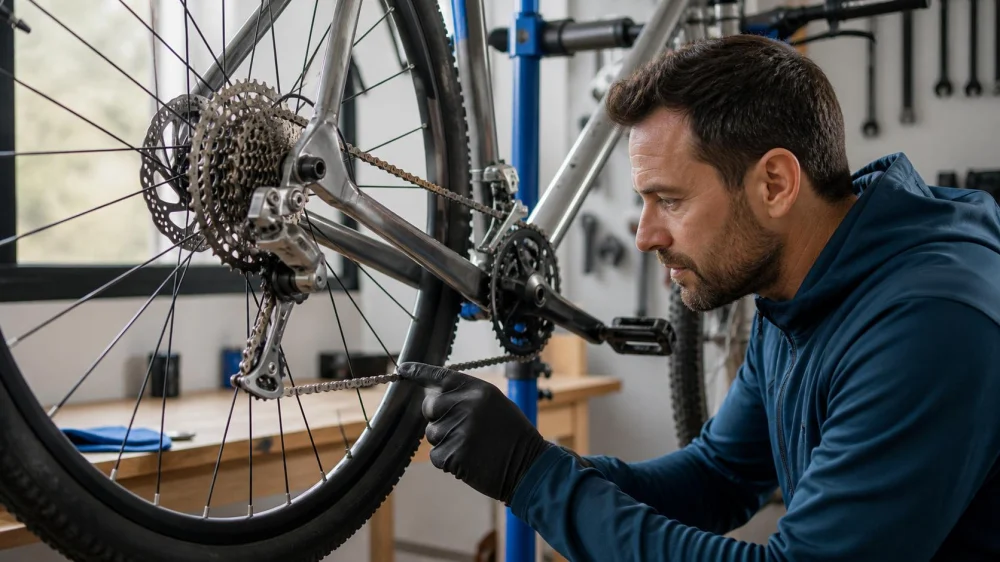
Place the bicycle in a stable work stand or have a trained helper support it according to the manufacturer. Remove the battery from an e-bike if instructed. Keep hair, sleeves, fingers, and tools away from moving chainrings, cogs, wheels, and disc rotors.
With the drivetrain completely stopped, visually inspect the chain for bent plates, protruding pins, damaged quick links, severe rust, and incorrect routing through the derailleur cage. Slowly rotate the cranks by hand only when the bike is secure and your hands are clear, watching for a link that does not articulate smoothly.
Check that the rear wheel is correctly seated and retained, then examine the derailleur and hanger area for obvious bending or impact. Do not straighten parts by eye or turn adjustment screws without knowing their function.
A chain-wear measuring tool can help, but tools and chain specifications differ. Use the tool maker's method and the drivetrain manufacturer's replacement limits.
Chain-skipping checklist
- Stop high-load riding. Avoid traffic, climbs, sprints, and technical terrain until the cause is known.
- Write down the pattern. Note gear, pedal load, recent shifts, sounds, and recent service or impact.
- Secure the bike. Use a suitable stand and keep the drivetrain stopped during close inspection.
- Inspect the chain. Look for damage, stiff links, contamination, routing errors, and compatibility concerns.
- Check wheel and visible hardware. Confirm proper retention and look for looseness or misalignment.
- Review recent changes. New chain, cassette, wheel removal, cable service, firmware changes, or a fall are strong clues.
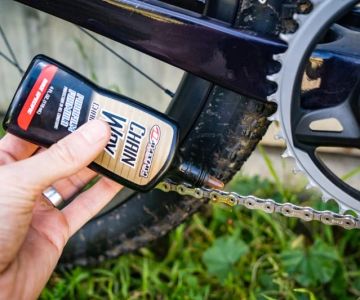
- Clean and lubricate correctly. Use a bicycle-specific process only when no damaged part is present; wipe excess lubricant from external surfaces.
- Test progressively. After a verified repair, begin in a controlled area with low load before normal riding.
When to use a bike shop
Use professional service for visible chain damage, repeated dropping, a bent derailleur or hanger, loose cassette or crank, suspected freehub trouble, crash damage, incompatible components, or skipping that persists after basic cleaning and inspection.
A mechanic can measure chain and gear wear, check hanger alignment, torque fasteners, verify component compatibility, inspect freehub engagement, update electronic shifting where applicable, and test under controlled conditions.
Bring the bike as configured when the fault occurs and describe the exact gear combination and load. Photos or a safe stationary video can help, but do not film while riding.
Safety limits
- Do not touch a moving chain or spin an e-bike drivetrain while hands are near it.
- Do not spray lubricant on brake rotors, rims, pads, tires, or floor surfaces.
- Do not ride hard to “test” a skip that can cause sudden loss of pedal support.
- Do not bend a derailleur hanger, chain plate, or tooth by guesswork.
- Do not mix chains, cassettes, chainrings, or quick links without verified compatibility.
- After crash damage or drivetrain jamming, inspect the frame, wheel, derailleur, and retention systems before riding.
Frequently asked questions
Why did a new chain start skipping?
Existing cassette or chainring wear, incorrect chain compatibility or length, installation error, a stiff link, or shifting adjustment may be involved. Inspect the system rather than assuming the new chain is defective.
Can too much chain lubricant cause skipping?
Excess lubricant attracts contamination and creates mess, but true load-related skipping often needs broader inspection. Apply the correct product and wipe external excess.
Is clicking the same as skipping?
No. Clicking can come from indexing, a stiff link, contact, or another component without loss of engagement. Describe both sound and pedal behavior.
Can I adjust the derailleur limit screws?
Only with the correct procedure. Limit screws control travel boundaries and are not a general solution for every shift problem; incorrect adjustment can send the chain into the wheel or frame.
Is it safe to ride home?
If the chain jumps under load, drops, jams, parts are loose, or terrain and traffic raise the consequence of failure, do not ride. Walk, use transport, or arrange assistance.
Sources and evidence notes
This article reflects common bicycle service practice: define the symptom, inspect chain condition and compatibility, measure wear, verify wheel and drivetrain alignment, and test progressively after repair.
Use bicycle and component manufacturer instructions, correct service tools, and a qualified bicycle mechanic for the specific drivetrain.
Conclusion and next steps
Stop reproducing the fault under heavy pressure. Record the gear and conditions, secure the bicycle, and inspect the chain, routing, wheel retention, and visible alignment with the drivetrain stopped. If damage, looseness, wear, crash history, or internal engagement is suspected, take those observations to a bike shop. A controlled diagnosis is far safer than discovering the same skip while standing on the pedals in traffic.

 D & D rides0.0 (0 reviews)
 Clyde James Cycles4.0 (210 reviews)
 Bike Junkie4.0 (179 reviews)
 P-51 Electric Bike Company4.0 (15 reviews)
 LAST MILE SF4.0 (197 reviews)
 Beverly Bikes4.0 (130 reviews)
 How to Teach Kids to Ride a Bike: A Step-by-Step Guide for Parents
 Tips for Riding on Busy City Streets: Smart Strategies for Urban Cyclists
 Best US National Parks for Mountain Biking: Ride Epic Trails Across America
 Best Aero Helmets for Time Trials and Racing
 How to Clean and Lubricate Your Bike Chain Like a Pro
 10 Must-Have Items for Long-Distance Cycling Trips