
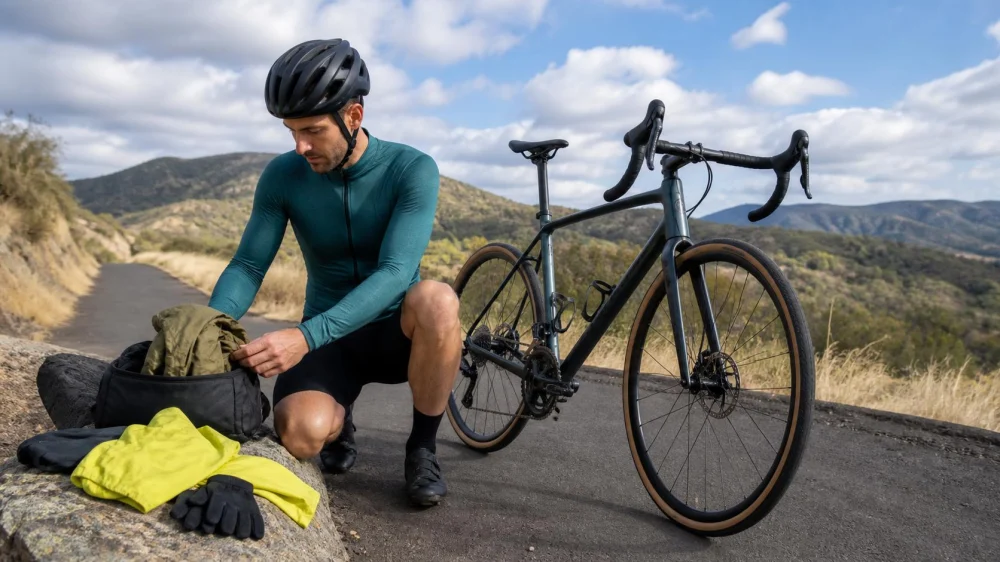
Dress for a Bike Ride When the Forecast Keeps Changing
On this page
Quick answer
Dress for a changing bike ride with thin removable layers matched to effort, wind, precipitation, elevation, daylight, and available storage. Start slightly cool rather than already sweating, protect the hands and core when needed, and carry a wind or rain shell you can reach quickly. Check the route's coldest and most exposed point—not only the temperature at the start—and choose a bailout plan.
This guide is for recreational cyclists in the United States. It offers a planning framework, not a universal wardrobe. Cold tolerance, medical conditions, ride intensity, humidity, altitude, and clothing design vary. Severe weather requires changing or canceling the ride, not simply adding clothing.
Plan by effort, not temperature alone
Cycling produces heat on climbs and exposes the rider to moving air on flats and descents. The same air temperature can feel comfortable during a hard effort and sharply cold after stopping. Humidity slows evaporation, while wet fabric and wind increase heat loss.
Review the full route profile:
- Expected low and high temperature during the ride
- Wind speed and direction, especially on exposed roads or ridges
- Rain timing and intensity
- Long descents after sweaty climbs
- Shade, tree cover, and sun exposure
- Elevation change and remote segments
- Stops, mechanical delays, and return after sunset
Choose clothing for the hardest-to-manage combination, then make it adjustable. A warm jacket that cannot be vented or stored may become a liability on the climb, while a light jersey without a shell can be inadequate on the descent.
Build a removable layer system
Base layer
The layer next to skin should manage moisture and fit without bunching. Material and weight depend on conditions and preference. Avoid relying on a saturated layer to keep you warm during a stop.
Insulating layer
A light jersey, thermal top, vest, or other breathable mid-layer can retain warmth while allowing movement. Choose thickness for the ride rather than casual standing temperature. Too much insulation can cause early sweating.
Weather layer
A wind-resistant vest or jacket protects the torso on descents and exposed sections. A rain shell needs enough weather protection for the forecast plus usable ventilation. Waterproof fabric does not eliminate moisture from exertion.
Convertible pieces
Arm warmers, knee or leg warmers, a vest, thin cap, neck layer, and removable gloves let riders adjust without changing the entire outfit. Check that each piece stays in place and does not interfere with circulation, vision, helmet fit, or controls.
Avoid loose cords, scarves, or fabric that can enter wheels, chainrings, or brakes. Reflective and high-visibility details can improve conspicuity but do not replace lights, lawful riding, and predictable road position.
Adjust for wind, rain, and sun
Wind: Protect the front of the torso while preserving ventilation. Crosswinds also affect control; clothing cannot solve unsafe gusts. Reduce exposure or change the route when needed.
Rain: Prioritize visibility, braking margin, temperature, and dry essentials. A jacket hood must not block hearing or side vision and must be compatible with the helmet if used. Wet gloves and shoes can reduce comfort and control.
Sun and heat: Use breathable coverage, suitable sunscreen on exposed skin, and a hydration plan. Dark or heavy layers can increase heat strain. Open zippers only when fabric cannot flap into controls and insects or debris will not create another hazard.
Cold: Hands, feet, ears, and core often need attention. Gloves must still allow full braking and shifting. Thick socks that make shoes tight can reduce circulation and feel colder.
Pack layers so you can reach them
- Roll each removable layer compactly and keep wet and dry items separate.
- Use pockets or bags that close securely and do not interfere with steering or pedaling.
- Put the next likely item—often a wind layer—where it is easiest to reach after stopping.
- Do not remove or put on clothing while riding unless it can be done without loss of control; stopping is the safer default.
- Carry an extra dry layer on remote or cold rides where a mechanical delay could become a temperature problem.
Test storage with the actual garment. A jacket that fits a pocket when dry may not fit after rain. Secure every zipper and strap before moving.
Pre-ride clothing checklist
- Check forecast by hour and along the route.
- Identify the coldest descent and most exposed section.
- Choose layers that can be vented, removed, and stored.
- Confirm helmet fit with any cap or ear coverage.
- Test full braking, shifting, and shoulder checks while wearing gloves and jacket.
- Secure loose fabric, cords, straps, and long hair.
- Pack rain protection and a dry layer when the consequence of getting wet is high.
- Carry lights if cloud, rain, shade, delay, or sunset may reduce visibility.
- Set a turnaround or shelter decision before conditions worsen.
Safety limits and important notes
Clothing does not make thunderstorms, wildfire smoke, flooding, ice, extreme heat, dangerous wind, or poor visibility safe. Check official weather and closure information and choose an indoor session or another day when conditions exceed your skills, equipment, or health plan.
Stop for confusion, loss of coordination, uncontrollable shivering, faintness, severe headache, chest pain, unusual shortness of breath, or another concerning symptom. Seek emergency help when appropriate. People with circulation, temperature-regulation, cardiac, respiratory, or other medical concerns should follow individualized clinical advice.
Frequently asked questions
Should I feel warm before I start?
You may feel slightly cool before easy movement because riding produces heat, but you should not begin shivering, numb, or unable to control the bike. Adjust for intensity and individual tolerance.
Is a vest more useful than a jacket?
A vest is compact and protects the core while venting arms; a jacket offers more complete wind or rain protection. Choose according to exposure, temperature, precipitation, and storage.
Can I wear cotton?
Cotton can retain moisture and dry slowly, which may be uncomfortable or risky in cool conditions. Consider the weather, effort, duration, and backup layers rather than treating any fiber as universally right or wrong.
What should I wear on a long descent?
Add wind protection before descending, close vents as needed, and protect hands enough to operate brakes. Stop in a safe place to change clothing rather than trying to dress while moving.
How do I test a new clothing system?
Use it first on a short route with easy access to home or a vehicle. Note temperature, effort, wind, what became wet, and which items you actually used.
Sources and evidence notes
This article reflects common endurance-sport and outdoor layering practice: account for exertion and wind, manage moisture, use removable layers, protect control and visibility, and plan for stops. Product performance and personal temperature response vary, so testing in low-consequence conditions is essential.
Next steps
For your next ride, mark the warmest climb, coldest descent, and latest return time. Choose a base, removable insulation, and accessible weather layer, then test braking and shoulder checks in the complete outfit. Afterward, record what you wore, what stayed dry, and which change you wished you could make sooner.
 V5 Cycles4.0 (230 reviews)
 Alan's Bike Shop4.0 (134 reviews)
 RIDE BIKE SHOP4.0 (95 reviews)
 Taylor Bike Company5.0 (46 reviews)
 Trek Bicycle Houston West University4.0 (695 reviews)
 Trek Bicycle Allentown4.0 (553 reviews)
 How to Teach Kids to Ride a Bike: A Step-by-Step Guide for Parents
 Tips for Riding on Busy City Streets: Smart Strategies for Urban Cyclists
 Best US National Parks for Mountain Biking: Ride Epic Trails Across America
 Best Aero Helmets for Time Trials and Racing
 How to Clean and Lubricate Your Bike Chain Like a Pro
 10 Must-Have Items for Long-Distance Cycling Trips