
Bike Shop Service Visit: What to Bring and Ask
On this page
Quick answer
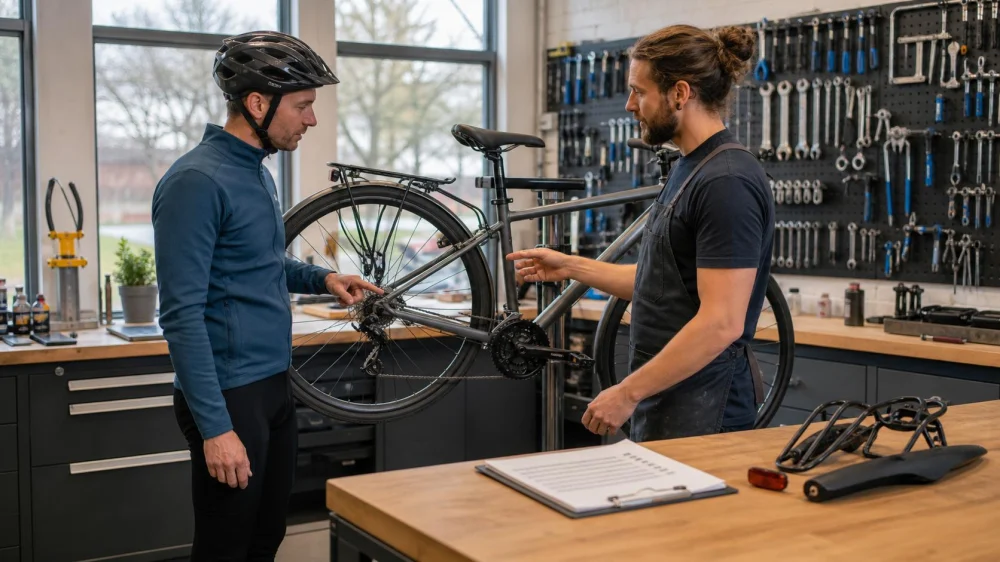
Bring the complete bicycle, the accessories connected to the problem, and a short symptom timeline. Explain when the issue occurs without diagnosing it, ask what inspection is included, set a price or work-approval limit, and get changed recommendations documented. At pickup, review the invoice, inspect the bike, confirm settings and removed parts, and test it safely before a normal ride.
Describe the problem clearly
A bike service intake translates a rider’s experience into an inspection and repair plan. The most useful description identifies the symptom, conditions, frequency, recent changes, and safety impact.
Before the visit, note:
- when the sound, slip, vibration, rub, or loss of function began;
- whether it occurs while pedaling, braking, coasting, turning, shifting, climbing, or hitting bumps;
- which gear, brake, wheel, load, speed, temperature, or weather makes it appear;
- whether the bicycle fell, was transported, washed, stored, or adjusted recently;
- what work or parts were completed before the symptom;
- whether any component feels loose, hot, damaged, or unsafe.
Use observable language: “chain jumps under hard pedaling in the smaller rear cogs” is more useful than “the cassette is bad.” A short video or audio clip can help with an intermittent symptom when recorded safely off the bike, but it cannot replace an inspection.
Stop riding when braking, steering, wheel retention, frame or fork integrity, tire condition, or another safety-critical system may be compromised. Arrange safe transport to the shop.
Bring the right bike and accessories
Ask the shop what to bring. Useful items may include:
- the bicycle in the configuration where the symptom occurs;
- the battery and key for an e-bike when transport and shop rules permit;
- the charger when the concern involves charging or electrical range;
- wheel-lock key, security fastener tool, or proprietary axle lever;
- computer, sensor, light, bag, rack, child seat, trailer connector, or pedal related to the issue;
- service records, warranty documents, and proof of purchase when coverage may apply;
- replacement parts you want evaluated before installation.
Remove unrelated valuables, bottles, loose bags, tools, and personal data. Leave accessories installed when they reproduce a rattle, interference, fit issue, or electrical problem. Clean heavy mud and contamination, but do not wash away evidence of a leak immediately before inspection.
Agree on inspection and service scope
Clarify whether the appointment is a specific repair, safety inspection, tune-up package, diagnostic assessment, assembly, fitting-related adjustment, or warranty evaluation. Package names do not guarantee the same tasks across shops.
Ask:
- Which systems and adjustments are included?
- Is diagnosis charged separately if I decline the repair?
- Will the shop check for recalls or service notices it can access?
- Does the work include a test ride, fastener check, wheel true, drivetrain cleaning, or firmware update?
- Which wear measurements will be recorded?
- What is excluded from the package?
- Could cleaning reveal or create the need for additional work?
Tell the mechanic how the bike is used: commuting, road, gravel, mountain, cargo, indoor training, or family transport. Load and conditions affect the relevant inspection.
Understand the estimate
Request a written estimate separating labor, parts, tax, diagnostic fees, and optional work. For parts, ask about compatibility, specification, warranty, and whether a different part changes performance or future service.
Clarify whether the estimate is fixed or preliminary. A technician may find hidden corrosion, stripped hardware, crash damage, internal wear, or incompatible prior work only after disassembly. Ask what happens if the bicycle cannot be repaired within the estimate.
Useful decision questions include:
- Which work is required for safe operation?
- Which work restores function but can be scheduled later?
- Which recommendation is preventive or performance-oriented?
- What evidence supports the recommendation?
- What are the consequences of deferring it?
- Will old parts be returned if requested and legally permitted?
Do not compare quotes by total alone unless the inspection, parts, labor, warranty, and scope match.
Set communication and approval limits
Provide a reachable phone number and preferred contact method. Set a clear authorization rule, such as no additional work without approval or approval up to a defined total. Ask the shop to document the revised amount and completion date before continuing.
Confirm:
- expected inspection and completion windows;
- storage charges and pickup deadline;
- how backordered parts affect the plan;
- whether the bicycle may be test-ridden;
- whether replaced parts are disposed of, recycled, or returned;
- the labor and parts warranty and how to make a follow-up claim.
If you cannot respond promptly, tell the shop whether work should pause. Silence should not be treated as open-ended approval unless the written agreement clearly says so and you accepted it.
Run a pickup check
- Compare the final invoice with the authorized work.
- Ask the mechanic to explain findings, measurements, and parts changed.
- Review remaining recommendations and their urgency.
- Confirm wheel attachment, brake lever feel, tire pressure, handlebar and saddle position, and accessory reinstallation.
- Check that e-bike keys, charger, removable battery, lock key, and other items are returned.
- Ask about bedding-in brakes, rechecking new components, or other break-in instructions.
- Take a short, low-speed test in a safe area when the shop permits.
- Save the itemized invoice and next-service notes.
If the original symptom remains, describe it immediately. Do not assume a new noise or control change is normal without asking.
Safety and service limits
A general tune-up cannot guarantee a bicycle is free of hidden damage. Carbon composites, suspension, hydraulic systems, e-bike electronics, batteries, and crash-damaged frames may require specialized inspection or manufacturer procedures.
Do not ride a bicycle the shop identifies as unsafe while awaiting parts or a decision. If you disagree with a safety finding, seek another qualified inspection rather than testing the bike under load.
Fit discomfort, numbness, or pain may involve the bicycle, riding load, technique, or a health issue. A mechanic can address equipment, while a qualified bike fitter or healthcare professional may be appropriate for other concerns.
Sources and evidence notes
This framework follows broad repair-service practice: report observable symptoms, define scope, separate estimate from completed work, document authorization, and verify safety-critical controls at pickup.
The bicycle and component manufacturers are the primary sources for specifications, compatibility, recalls, and service limits. A qualified mechanic assesses current condition. Written shop terms govern estimates, storage, warranty, and authorization subject to applicable law.
Frequently asked questions
Should I clean the bike before service?
Remove heavy dirt unless the shop says otherwise, but do not wash away evidence of a leak or damage. Never pressure-wash bearings or electronics.
Do I need an appointment?
Policies vary. Call with the bike type and service need, especially for e-bikes, suspension, cargo bikes, or warranty work.
Can I supply my own parts?
Ask first. The shop may decline incompatible, used, counterfeit, or unsafe parts and may offer different warranty coverage.
Why did the estimate change?
Disassembly can reveal additional damage or wear. The shop should explain the finding and obtain authorization according to the agreement.
Should I test ride at pickup?
When the shop permits, a brief low-risk test can confirm controls and the original symptom before you resume normal riding.
Conclusion and next steps
A productive bike shop visit starts with a precise symptom description and the correct accessories. Agree on inspection scope, estimate structure, and approval rules before the work begins.
Your next step is to write a five-line symptom log, call the shop about what to bring, and remove unrelated valuables. At pickup, review the invoice, confirm every control and accessory, save the record, and test the bicycle in a safe area.
 Serious Cycles4.0 (75 reviews)
 Solé Bicycles (Coming Soon)0.0 (0 reviews)
 Highbridge Park Mountain Bike Trailhead3.0 (12 reviews)
 Rose City Recumbent Cycles5.0 (28 reviews)
 EaDo Bike Co4.0 (231 reviews)
 Shirk's Bike Shop4.0 (229 reviews)
 How to Teach Kids to Ride a Bike: A Step-by-Step Guide for Parents
 Tips for Riding on Busy City Streets: Smart Strategies for Urban Cyclists
 Best US National Parks for Mountain Biking: Ride Epic Trails Across America
 Best Aero Helmets for Time Trials and Racing
 How to Clean and Lubricate Your Bike Chain Like a Pro
 10 Must-Have Items for Long-Distance Cycling Trips