
- core-strength-basics-bike-control - Understanding why core strength matters for bike handling
- body-mechanics-cycling-stability - How your body controls balance and stability on a bike
- training-core-workouts-cyclists - Practical exercises to improve cycling performance training
- real-world-bike-handling-scenarios - How stronger core improves control in real riding conditions
- progress-plan-cycling-core-strength - Building a structured routine for long-term improvement
Why Core Strength Becomes the Hidden Engine of Bike Control
Most riders think better bike handling comes from stronger legs or more expensive gear. In reality, the real control center sits slightly higher — in the core. When discussing how to build core strength for better bike handling, it’s not about looking fit or doing endless crunches. It’s about creating a stable platform that allows every movement on the bike to be precise, efficient, and predictable.
A cyclist with weak core stability often “fights” the bike. You’ll see unnecessary wobbling on climbs, instability during descents, and fatigue that sets in far earlier than expected. A strong core, on the other hand, quietly absorbs road vibrations and keeps upper and lower body communication clean. This is what separates casual riders from confident, controlled cyclists.
How the Body Actually Controls Bike Handling and Stability
1. The Core as a Stabilization Bridge
Your core muscles act like a bridge between your upper body and legs. Every pedal stroke generates force that travels through this bridge. If the structure is weak, energy leaks. If it is strong, power transfers efficiently to the pedals while keeping the upper body calm.
In cycling stability training, this concept is often overlooked. Riders focus heavily on quads and glutes, forgetting that without a stable midsection, even strong legs cannot translate into smooth bike handling skills.
2. Upper Body Relaxation Depends on Core Strength
A surprising detail many experienced riders mention is that tension in the shoulders often comes from a weak core. When the midsection cannot stabilize the torso, the upper body compensates. This leads to stiff arms and reduced steering precision.
Improving cycling performance training through core workouts for cyclists allows the shoulders, arms, and hands to relax, improving steering responsiveness and comfort on long rides.
Real Rider Scenario: When Core Weakness Becomes Obvious
A recreational rider once shared an experience during a weekend group ride through rolling hills. On flat terrain, everything felt fine. But once the descent began, small vibrations turned into instability. The front wheel felt unpredictable, and braking became uneven.
After analyzing the situation, the issue wasn’t bike setup or tire pressure. It was core fatigue. As the ride progressed, the rider’s midsection could no longer stabilize the upper body against downhill forces. This caused delayed reactions and overcorrections on the handlebars.
After six weeks of focused cycling stability training, including planks, anti-rotation drills, and controlled breathing exercises, the same rider reported dramatically improved confidence on descents. This is a practical demonstration of how core strength directly influences bike handling skills.
Core Workouts That Translate Directly Into Better Riding Control
1. Anti-Rotation Training for Steering Stability
One of the most effective ways to improve bike handling is teaching your core to resist unwanted rotation. Exercises like pallof presses simulate real cycling demands where your torso must remain stable while legs generate alternating force.
This type of training improves cycling control during climbs, especially when fatigue tries to twist the upper body side-to-side.
2. Static Stability Holds for Endurance Riding
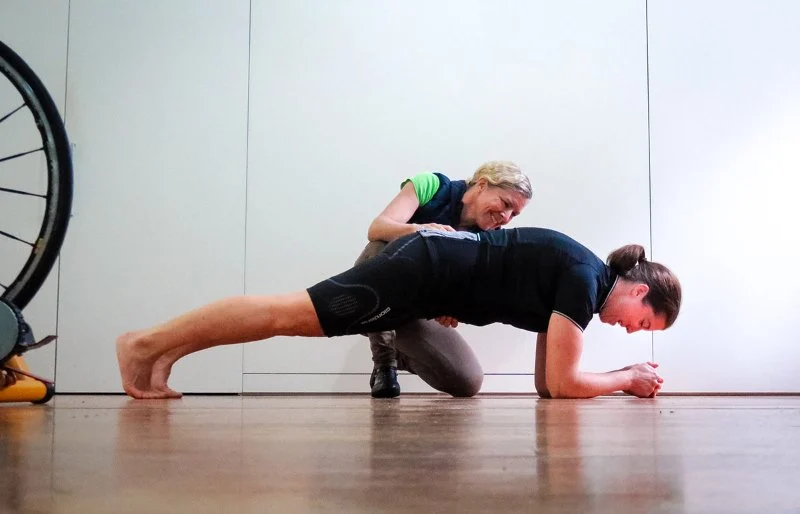
Planks are often underestimated, but when performed correctly, they build endurance in deep core muscles. Holding a stable position for extended periods mimics long-distance riding posture.
Over time, this improves how long a rider can maintain efficient posture without collapsing into fatigue-driven movement patterns.
3. Dynamic Balance Movements
Single-leg movements and stability ball exercises introduce controlled instability. This is essential because cycling is not a static sport — every pedal stroke introduces slight shifts in balance.
Training the body to handle micro-adjustments improves real-world balance on the bike, especially on uneven terrain.
How Core Strength Changes Real Cycling Performance
As riders progress in core workouts for cyclists, several noticeable changes occur. First, energy efficiency improves. Riders find they can maintain speed with less effort because their body is no longer wasting energy stabilizing itself unnecessarily.
Second, bike handling becomes more intuitive. Instead of overthinking turns, braking, or terrain shifts, the body reacts naturally. This is a major milestone in cycling performance training.
Third, fatigue resistance increases. A strong core reduces strain on the lower back, a common complaint among endurance cyclists.
Structured Progress Plan for Long-Term Cycling Stability Training
Phase 1: Foundation Building
Focus on simple movements such as planks, bird-dogs, and controlled breathing. The goal is not intensity but awareness and control. Riders often underestimate how difficult it is to maintain proper form for even 30 seconds.
Phase 2: Controlled Instability
Introduce movements that challenge balance. This includes stability ball exercises and slow unilateral movements. At this stage, the connection between core engagement and bike handling skills becomes more noticeable.
Phase 3: Cycling-Specific Integration
Here, training begins to mimic riding conditions. Standing core holds, simulated climbing positions, and dynamic movement patterns help translate gym strength into real-world control.
Many cyclists complement this stage with guidance from resources like Cycling Guider, where structured training insights and performance-focused tools help refine both strength and riding technique.
Common Mistakes That Limit Bike Handling Improvement
Overtraining Abdominal Isolation
Sit-ups alone do not build functional cycling strength. They fail to train stability under load, which is essential for real bike control.
Ignoring Fatigue Resistance
Many riders can hold a plank for one minute but lose stability after 30 minutes of riding. Training must reflect endurance conditions, not just short bursts.
Neglecting Posture Awareness
Without conscious posture correction during rides, even strong core muscles cannot fully support optimal performance.
Why Core Development Transforms Riding Confidence
As riders develop stronger midsections, something subtle changes: confidence. Descents feel less intimidating. Tight corners become smoother. Unexpected terrain feels manageable rather than reactive.
This psychological shift is just as important as physical improvement. Better bike handling skills are not only about control but also about trust — trust in your body’s ability to respond accurately under pressure.
Over time, structured cycling stability training becomes less of a workout and more of a foundation for every ride. The bike feels like an extension of the body rather than a separate machine that must constantly be corrected.


 South Mountain Cycle4.0 (142 reviews)
 CycleWerks Bicycle & Fitness5.0 (220 reviews)
 The Zoo Cycles4.0 (62 reviews)
 All About Bikes4.0 (60 reviews)
 NeverLost Adventures Bicycle Shop5.0 (45 reviews)
 FAST WHEEL MX3.0 (86 reviews)
 How to Teach Kids to Ride a Bike: A Step-by-Step Guide for Parents
 Tips for Riding on Busy City Streets: Smart Strategies for Urban Cyclists
 Best US National Parks for Mountain Biking: Ride Epic Trails Across America
 Best Aero Helmets for Time Trials and Racing
 How to Clean and Lubricate Your Bike Chain Like a Pro
 10 Must-Have Items for Long-Distance Cycling Trips