
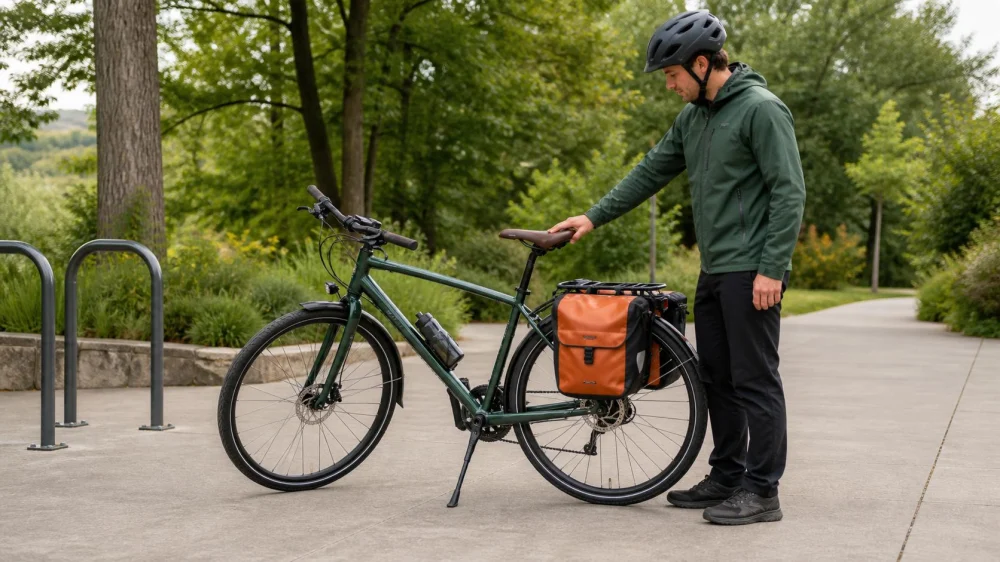
Bicycle Parking: Ground, Lean, and Cargo Stability
On this page
Quick answer
parking a bicycle on a stable surface is easiest to manage when you define the goal, verify the relevant details, and set clear stop conditions before acting. Check the ground, lean, stand capacity, cargo, wind, and passing traffic before stepping away, and choose a supported alternative when stability is uncertain. Start with current instructions and observable facts, use a written checklist, and ask a qualified professional when the safe choice depends on technical, medical, legal, or site-specific judgment.
Understand parking a bicycle on a stable surface
For this guide, parking a bicycle on a stable surface means a deliberate process for a specific situation rather than a promise of one universal answer. The relevant details can change with equipment, venue, provider, product, weather, health, local rules, and individual needs. Separate what you can observe from what requires measurement, records, or professional judgment.
This article is for readers in United States who want a practical starting point. It is not a substitute for current manufacturer instructions, venue rules, public guidance, contracts, or advice from a qualified professional who can assess the actual situation.
Stable parking checklist
- Read the vehicle owner's manual and note model-specific limits before touching or replacing anything.
- Park on a stable surface, secure the vehicle, switch it off, and keep clear of traffic.
- Compare when the symptom appears: cold start, idle, braking, turning, bumps, rain, speed, or electrical load.
- Look for visible damage, leaks, looseness, warning lights, unusual heat, smell, or smoke without dismantling safety-critical parts.
- Record dates, mileage, weather, recent service, and a short video or sound clip when it can be captured safely.
- Use the correct specification for any consumable or replacement part; a similar appearance is not enough.
- Stop driving and arrange professional help when steering, braking, tyres, visibility, restraint systems, fire risk, or control may be affected.
Park and load in a safer order
- Define the exact task and check the manual for location, specification, interval, and warnings.
- Inspect from a safe position and compare both sides or a known normal condition where useful.
- Perform only the simple checks the manufacturer allows, using proper lighting and protective equipment.
- Change one thing at a time so the result is clear; never bypass a warning or safety device.
- Test in a safe stationary setting first, then use a low-risk route only if the vehicle remains roadworthy.
- Document the result and schedule qualified service when the cause or safe limit is uncertain.
Keep a short record for parking a bicycle on a stable surface: date, observed condition, decisions, questions, responsible person, due date, and outcome. Photos or receipts can support the record when appropriate, but store personal, property, or account information securely.
Stand, cargo, and traffic limits
Vehicle designs differ, and a general guide cannot confirm roadworthiness. Do not crawl beneath an unsupported vehicle, open a hot cooling system, touch moving components, defeat interlocks, or attempt regulated repairs without suitable training and equipment.
Stop and seek prompt help when parking a bicycle on a stable surface involves an immediate hazard, loss of safe control, worsening damage, injury, fire, smoke, strong odour, or a condition outside the instructions and your competence. Use emergency services when people may be in immediate danger.
Bicycle parking questions
What should I check first for parking a bicycle on a stable surface?
Start with the immediate safety or suitability question, then verify current instructions, condition, scope, timing, and who is responsible.
When is the lowest price not the best choice?
When it changes scope, quality, safety, access, support, or total cost. Compare like with like and document exclusions.
Can online reviews answer the decision?
Reviews can reveal questions to ask, but they may be incomplete, outdated, or unrelated to your exact need. Verify important facts directly.
What if the information conflicts?
Pause and ask the responsible provider, manufacturer, venue, authority, or qualified professional to clarify in writing when possible.
What should I save afterward?
Keep the final instructions, receipt or agreement, relevant photos, results, warranty or follow-up details, and unresolved actions.
Bike and site guidance
Use current primary information for parking a bicycle on a stable surface: manufacturer instructions, the responsible venue or provider, written agreements, local authorities, and qualified professionals. Verify details for United States and the specific date because rules, availability, prices, and operating conditions can change.
Recheck before walking away
Turn parking a bicycle on a stable surface into a short sequence: define the goal, verify the critical facts, prepare safely, act within clear limits, and record the outcome. Check the ground, lean, stand capacity, cargo, wind, and passing traffic before stepping away, and choose a supported alternative when stability is uncertain. If an important fact remains uncertain, pause before committing time, money, access, or safety.


 R+E Cycles (Rodriguez Bicycle Company)4.0 (73 reviews)
 Brooklyn Machine Works4.0 (4 reviews)
 Bicycle Doctor Nordic Ski Shop5.0 (536 reviews)
 The Space Coast E-Bike Store3.0 (8 reviews)
 Gary Turner BMX4.0 (13 reviews)
 Electric & Folding Bikes Northwest4.0 (94 reviews)
 How to Teach Kids to Ride a Bike: A Step-by-Step Guide for Parents
 Tips for Riding on Busy City Streets: Smart Strategies for Urban Cyclists
 Best US National Parks for Mountain Biking: Ride Epic Trails Across America
 Best Aero Helmets for Time Trials and Racing
 How to Clean and Lubricate Your Bike Chain Like a Pro
 10 Must-Have Items for Long-Distance Cycling Trips