
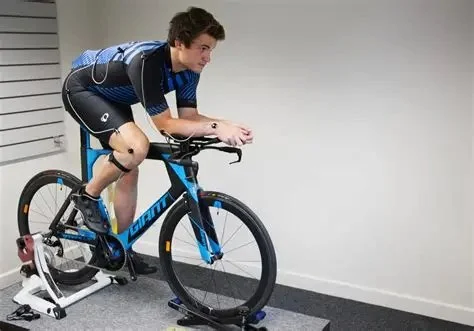
- Why-cleat-position-affects-knee-pain-in-cycling
- Understanding-proper-bike-cleat-alignment-basics
- Step-by-step-guide-to-cleat-position-adjustment
- Real-cyclist-case-study-and-common-mistakes
- Long-term-benefits-of-proper-cleat-setup
Why Cleat Position Has a Direct Impact on Knee Pain
Many cyclists are surprised to learn that knee discomfort often has nothing to do with mileage or fitness level—but everything to do with cleat position adjustment. When your foot is slightly misaligned on the pedal, even by a few millimeters, it changes how force travels through your knee joint.
Cycling is a repetitive motion sport. Every pedal stroke sends pressure through a fixed kinetic chain: foot, ankle, knee, hip. If that chain is misaligned, the knee absorbs unnecessary stress, which can lead to pain, inflammation, or long-term injury.
A common example involves riders who suddenly increase training volume. One recreational cyclist shared how he developed sharp pain on the outside of his right knee after a long weekend ride. The issue wasn’t overtraining—it was a slightly rotated cleat that forced his knee to track inward with every stroke.
This is why professional bike fitting services and platforms like Cycling Guider emphasize cleat setup as one of the most important foundations of injury-free riding.
Understanding Proper Bike Cleat Alignment Basics
Before making adjustments, it’s important to understand what cleats actually control. Cleats determine how your shoe attaches to the pedal, influencing foot angle, lateral positioning, and rotational freedom.
Fore-Aft Position (Front to Back)
This determines how far forward or backward your foot sits on the pedal. A forward position increases power but may stress the knee, while a more centered position improves stability and reduces joint strain.
Lateral Position (Side to Side)
This affects how your knees track during pedaling. Even small shifts can reduce inward or outward knee collapse, which is a common cause of cycling knee pain.
Rotation Angle (Float Setup)
Most modern pedals allow a slight degree of float. This rotational freedom helps your knees move naturally instead of locking into an unnatural angle.
Proper bike cleat alignment is not about copying a “perfect” setup—it’s about matching your natural biomechanics.
Step-by-Step Guide to Cleat Position Adjustment
Adjusting cleats doesn’t require advanced tools, but it does require patience and small incremental changes. The goal is to fine-tune, not overhaul everything at once.
Step 1: Start With Neutral Position
Place your cleats so the ball of your foot sits roughly over the pedal axle. This is the most balanced starting point for most riders.
Step 2: Check Knee Tracking
Ride on a stationary trainer or short outdoor loop. Observe whether your knees move straight or drift inward/outward during pedaling.
Step 3: Make Micro Adjustments
Adjust cleats in 2–3 mm increments. Small changes are often enough to eliminate discomfort without disrupting power output.
Step 4: Test Over Short Rides
Avoid long rides immediately after adjustment. Instead, test changes in short sessions to evaluate comfort and stability.
A key principle in professional fitting is that proper cycling fit evolves over time. Your body adapts, and cleat position should adapt with it.
Real Cyclist Case Study and Common Setup Mistakes
One amateur cyclist preparing for a charity ride experienced persistent knee pain during climbs. Initially, he assumed it was fatigue. After several unsuccessful attempts at rest and stretching, he consulted a fitter through Cycling Guider.
The issue was surprisingly simple: his cleats were rotated slightly outward, forcing his knees to overcompensate inward with every pedal stroke. This subtle misalignment created cumulative stress.
Once corrected, the pain disappeared within two weeks, and his pedaling efficiency improved noticeably.
Common Mistakes Cyclists Make
Many riders unintentionally worsen knee issues by making large adjustments too quickly or copying another rider’s setup. Every rider has unique hip structure, ankle mobility, and leg length differences.
Another frequent mistake is ignoring early warning signs. Mild discomfort is often dismissed until it becomes chronic pain requiring recovery time.
Professional bike fitters consistently emphasize that prevention is far more effective than correction after injury.
Long-Term Benefits of Proper Cleat Setup for Cyclists
Once optimized, cleat position becomes one of the most powerful tools for improving cycling comfort and performance simultaneously.
Correct alignment reduces knee strain, improves power transfer, and allows for smoother cadence. Over time, this leads to less fatigue during long rides and more consistent training output.
Cyclists who maintain proper cleat setup also experience fewer overuse injuries, especially during high-volume training phases.
The biggest benefit, however, is sustainability. A well-aligned bike fit allows riders to train longer, recover faster, and enjoy cycling without chronic discomfort.
This is why ongoing support and education from platforms like Cycling Guider can make a significant difference for both beginner and experienced cyclists.



 Bicycle Express4.0 (285 reviews)
 5 Points Bikes3.0 (64 reviews)
 Alien Rides Electric Scooters, Bikes and EUCs4.0 (31 reviews)
 Bike Mart4.0 (2281 reviews)
 Stone Mountain Bike Company4.0 (115 reviews)
 Hub City Cycles4.0 (233 reviews)
 How to Teach Kids to Ride a Bike: A Step-by-Step Guide for Parents
 Tips for Riding on Busy City Streets: Smart Strategies for Urban Cyclists
 Best US National Parks for Mountain Biking: Ride Epic Trails Across America
 Best Aero Helmets for Time Trials and Racing
 How to Clean and Lubricate Your Bike Chain Like a Pro
 10 Must-Have Items for Long-Distance Cycling Trips