
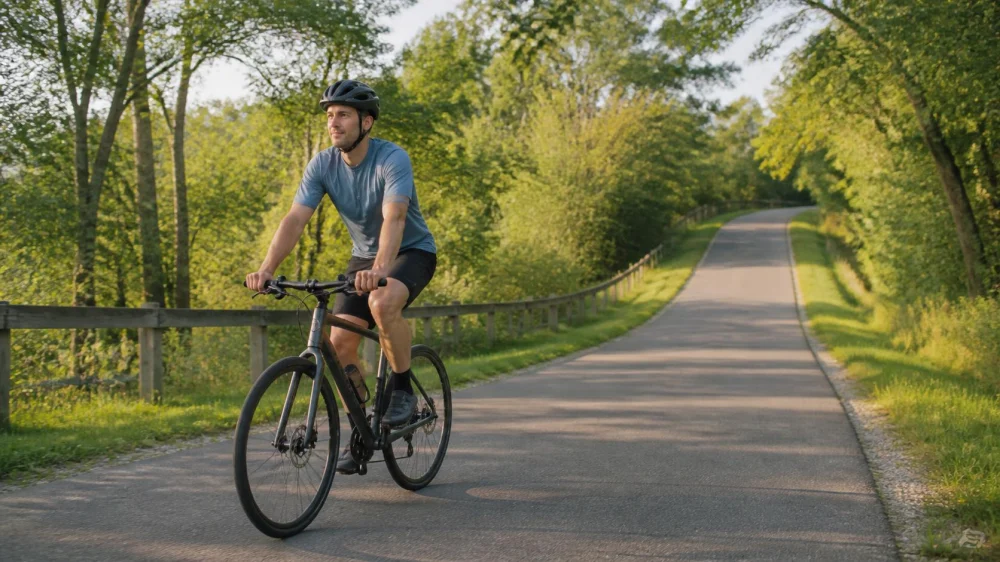
Cycling Cadence Explained: Find a Sustainable Pedaling Rhythm
On this page
- Quick answer
- What cycling cadence means
- Why there is no single perfect cadence
- How gears and terrain change rhythm
- Measure your current cadence
- Practice smoother pedaling
- Use comfort and control decision rules
- Check fit before blaming cadence
- Limitations and safety notes
- Frequently asked questions
- Sources and evidence notes
- Conclusion and next steps
Quick answer
Cycling cadence is how quickly the cranks turn, usually described as revolutions per minute. A sustainable cadence feels controlled, allows steady breathing for the effort, and avoids both grinding an excessively hard gear and bouncing from an unnecessarily fast spin. There is no universal ideal number. Use gears to maintain a comfortable rhythm as terrain, fatigue, bicycle type, and ride goal change.
This guide is for adult recreational cyclists in the United States. It explains riding technique, not medical treatment or a performance prescription. New symptoms or persistent pain require appropriate professional assessment.
What cycling cadence means
Cycling cadence is the number of complete crank revolutions a rider makes in one minute. A cadence sensor, compatible bike computer, indoor trainer, or some exercise bikes can display it. Riders can also count pedal revolutions over a timed period while in a safe stationary setting.
Cadence is not speed. Two riders can pedal at the same cadence while using different gears and traveling at different speeds. Power and effort also depend on how much force is applied each turn.
Why there is no single perfect cadence
Comfortable cadence varies with body, training, bike fit, crank length, gear range, surface, grade, wind, fatigue, and purpose. A short steep climb, technical trail, relaxed recovery ride, and fast road effort create different demands.
A number copied from a professional rider may not fit a beginner, commuter, mountain biker, or someone carrying cargo. The useful goal is a range of controllable rhythms and the skill to select gears before pedaling becomes strained or unstable.
Best for endurance: a rhythm the rider can maintain with smooth form and appropriate effort. Not ideal: chasing a device number while ignoring traffic, terrain, breathing, control, or discomfort.
How gears and terrain change rhythm
A harder gear moves the bicycle farther for each crank turn but requires more force. An easier gear reduces force per turn but may require faster pedaling to maintain speed. Shift to balance force and rhythm.
- Before a climb: shift early enough to avoid a sudden high-force grind.
- On loose terrain: choose a gear that supports smooth traction rather than abrupt force spikes.
- With a tailwind or descent: do not chase cadence beyond stable control; coast when appropriate.
- Approaching a stop: select an easier restart gear before coming to rest when traffic and equipment allow.
- When carrying cargo: anticipate slower acceleration and increased braking distance as well as gearing needs.
Avoid shifting under extreme chain load when a brief reduction in pedal force would allow a smoother change. Follow component guidance and maintain the drivetrain.
Measure your current cadence
- Choose a controlled setting. Use a stationary trainer or a quiet, flat, traffic-free legal area where attention can remain on riding.
- Warm up normally. Do not test a high effort immediately after starting.
- Ride at a conversational effort. Record cadence only if a device can display it without manual interaction.
- Note feel and context. Record gear, surface, slope, breathing, bouncing, and leg fatigue.
- Repeat on several rides. Look for a comfortable range rather than one isolated number.
Do not count, type, or adjust a device in moving traffic. Set screens before the ride and review data after stopping.
Practice smoother pedaling
Make small changes on an indoor trainer or safe flat route. Shift one gear easier and allow cadence to rise slightly while keeping hips quiet and upper body relaxed. Return to the normal rhythm before form deteriorates.
A simple practice set:
- ride several minutes at an easy familiar rhythm;
- increase cadence gradually for a short controlled interval without increasing effort sharply;
- recover fully at the familiar rhythm;
- repeat only while pedaling remains smooth and breathing stays appropriate;
- end the drill before fatigue produces bouncing or loss of control.
Skill comes from consistent low-risk practice, not forcing a large change in one session.
Use comfort and control decision rules
- If the pedals feel very heavy: shift easier before force and form deteriorate.
- If hips bounce on the saddle: reduce cadence, stabilize, and check fit and resistance.
- If traction breaks on loose ground: smooth the force and choose a gear that supports control.
- If breathing rises beyond the ride goal: reduce effort rather than chasing cadence.
- If a descent spins out: prioritize braking, line, and stability; coasting may be the correct choice.
- If pain develops: stop the drill and investigate fit, load, recovery, and health factors.
Check fit before blaming cadence
Saddle height and fore-aft position, reach, handlebar setup, shoe support, cleat position, crank length, and foot stability can affect how pedaling feels. A rider who rocks at the hips or reaches for the pedals may have a fit issue rather than a cadence problem.
Change one adjustment at a time and stay within manufacturer limits. A qualified bike fitter or experienced shop can assess position and equipment. Medical professionals should assess symptoms such as persistent pain, numbness, weakness, or swelling.
Limitations and safety notes
Cadence data can be inaccurate if a sensor is misconfigured, loses connection, or reports estimated values. Treat the number as one observation alongside perceived effort and control.
Stop riding and seek appropriate help for chest pain, fainting, severe breathing difficulty, sudden weakness, confusion, or another emergency sign. Do not use cadence practice to push through illness, acute injury, or dangerous heat and weather.
Frequently asked questions
What cadence should a beginner use?
There is no universal beginner number. Start with a gear and rhythm that feel smooth, controlled, and sustainable, then develop range gradually.
Is a higher cadence always better for the knees?
No. An easier gear may reduce force per pedal stroke, but pain has many possible causes. Fit, training load, technique, injury, and health all matter.
Do I need a cadence sensor?
No. A sensor makes tracking convenient, but riders can learn to notice grinding, bouncing, breathing, and smooth shifting without one.
Why does cadence drop on climbs?
Gravity increases the required force. Limited low gearing, late shifting, fatigue, traction, and slope can reduce cadence. Shift early and choose a sustainable pace.
Sources and evidence notes
This guide reflects broad cycling technique and training principles: cadence interacts with gear, force, terrain, fit, and effort, and riders use varied rhythms. It intentionally avoids prescribing one target because individual context and ride demands differ.
Conclusion and next steps
Observe your natural cadence on several easy rides, then practice small changes in a controlled setting. Use gears early to keep force and rhythm manageable, and prioritize traffic awareness, traction, breathing, and smooth control over a screen number. If discomfort persists, assess bike fit and seek appropriate health guidance before adding training load.
 George Garner Cyclery Libertyville4.0 (219 reviews)
 Trek Bicycle Alamo5.0 (235 reviews)
 Hermosa Cyclery4.0 (213 reviews)
 The Meteor Bike Shop Austin5.0 (38 reviews)
 Northeast Cyclery LLC4.0 (87 reviews)
 North Portland Bike Works5.0 (115 reviews)
 How to Teach Kids to Ride a Bike: A Step-by-Step Guide for Parents
 Tips for Riding on Busy City Streets: Smart Strategies for Urban Cyclists
 Best US National Parks for Mountain Biking: Ride Epic Trails Across America
 Best Aero Helmets for Time Trials and Racing
 How to Clean and Lubricate Your Bike Chain Like a Pro
 10 Must-Have Items for Long-Distance Cycling Trips