
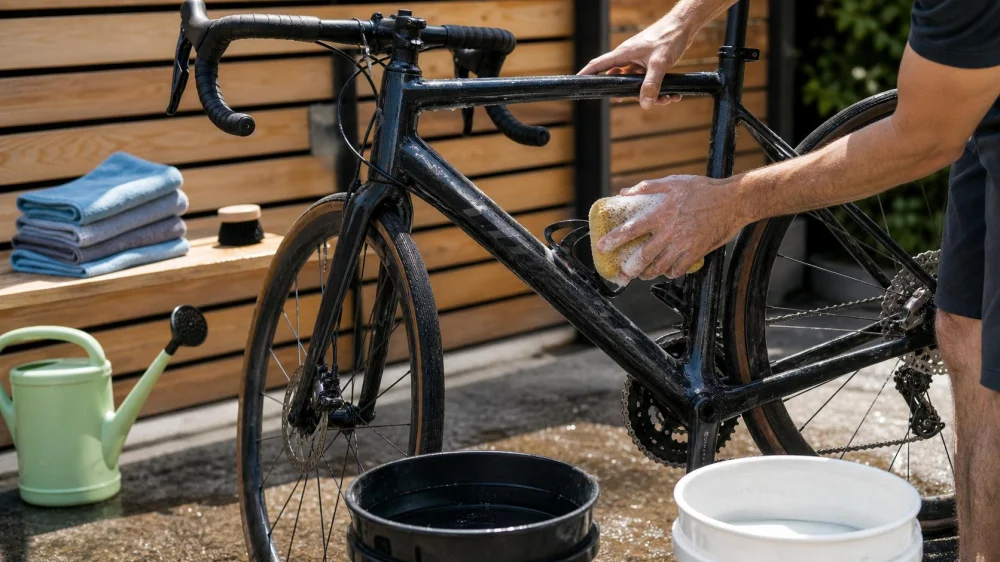
How to Clean a Bicycle Without Damaging Its Parts
On this page
- Quick answer
- Set up a safe cleaning area
- Choose compatible supplies
- Rinse and wash the frame
- Clean the drivetrain carefully
- Protect brakes and bearings
- Special care for e-bikes and suspension
- Dry, inspect, and lubricate
- Post-cleaning checklist
- Sources and evidence notes
- Frequently asked questions
- Conclusion and next steps
Quick answer
Clean a bicycle with low-pressure water, mild bike-compatible cleaner, soft brushes, and separate tools for the drivetrain and brakes. Avoid pressure washers, harsh solvents, soaked bearings, and lubricant on braking surfaces. Dry the bike, inspect for damage, apply the correct chain lubricant sparingly, wipe excess, and test the brakes and controls before riding.
Set up a safe cleaning area
Work where runoff, soap, and degreaser can be controlled according to local rules. Use a repair stand when available or support the bicycle securely so it cannot fall. Do not clamp a carbon or thin-walled frame tube unless the manufacturer specifically permits it; clamp a suitable seatpost or use an approved stand method.
Remove bags, bottles, computers, pumps, and loose accessories. Close charging ports and follow manufacturer instructions for batteries and electronic components. Take a quick photo of cable routing and accessory positions if you plan to remove anything unfamiliar.
This guide covers routine cleaning for typical U.S. bicycles. Materials, finishes, bearings, suspension, brakes, and e-bike systems differ. Follow the bicycle and component manufacturers’ current care instructions.
Choose compatible supplies
Gather two buckets or separate tool sets so oily drivetrain dirt does not reach brake rotors, pads, rims, or frame towels. Useful supplies include:
- Low-pressure hose, watering can, or spray bottle.
- Mild bicycle-specific wash or diluted gentle soap approved for the finish.
- Soft sponge or microfiber mitt for the frame.
- Dedicated brushes for cassette, chainrings, pulleys, and tires.
- Bike-compatible degreaser used as directed.
- Clean drying towels and a separate clean brake-surface cloth.
- Correct chain lubricant for conditions and manufacturer instructions.
- Protective gloves and eye protection appropriate to the products.
Avoid household solvents, gasoline, strong alkaline cleaners, abrasive pads, furniture polish, and unknown sprays. They can damage finishes, seals, adhesives, plastics, composite parts, or braking performance.
Rinse and wash the frame
Let heavy mud soften rather than scraping dry grit across paint. Use low-pressure water from above and the side, keeping the stream moving. Do not aim forcefully at hubs, headset, bottom bracket, suspension seals, pivots, cable openings, electronic connectors, or motor interfaces.
Wash from cleaner areas to dirtier areas. Start at the handlebar and upper frame, then move to fork, frame tubes, wheels, and tires. Use a soft tool and rinse it often so grit does not scratch the finish.
Clean under the down tube, behind the seat tube, around bottle bosses, beneath fenders, and near tire clearance. Avoid flooding internal frame openings. For matte finishes, use products approved by the manufacturer; polishing agents can create uneven glossy patches.
Clean the drivetrain carefully
Shift to a gear that gives access to the cassette and chainrings. Apply degreaser to the drivetrain tool rather than spraying broadly near brakes. Follow product contact time and do not let strong cleaner dry on paint or anodized parts.
Turn the cranks backward only when the bike and drivetrain design allow it safely. Brush the chain, chainrings, cassette, and derailleur pulleys. Use care around fingers, clothing, spokes, rotors, and pinch points.
Rinse lightly or wipe as the product directs. A chain does not need to look surgically clean after every ride. Excessive degreasing can remove lubricant from inside rollers and expose parts to corrosion.
Waxed chains and some specialty drivetrains require different cleaning. Do not apply conventional wet or dry lube over a wax system without checking the system instructions.
Protect brakes and bearings
Disc brake pads and rotors can be contaminated by oil, degreaser, polish, aerosol, or dirty gloves. Keep drivetrain products away and never touch rotor braking tracks with oily hands. Use only brake-cleaning products approved by the brake manufacturer.
For rim brakes, keep the rim braking track free from lubricant and polish. Inspect pads for embedded grit and correct wear. Carbon rims may require specific pads and cleaning methods.
Do not use a pressure washer or concentrated nozzle around bearing seals. Water forced into hubs, headset, bottom bracket, pedals, pivots, and suspension can displace grease and cause corrosion. Spinning bearings with compressed air can also damage them.
If brakes become noisy or weak after cleaning, do not assume they will recover during a ride. Stop and have contamination, pad condition, rotor or rim condition, and setup evaluated.
Special care for e-bikes and suspension
Turn an e-bike off and follow the manufacturer’s battery-removal and washing instructions. Some systems should be cleaned with the battery installed and ports sealed; others specify removal. Water-resistance ratings do not mean a bicycle can be submerged or pressure-washed.
Keep water and cleaner away from charging ports, display controls, connectors, motor seams, and battery contacts. Never charge a wet or damaged battery. Let components dry completely and inspect seals before reconnecting.
For suspension, wipe stanchions and shock shafts with a clean soft cloth. Do not pull dirt under seals or spray solvent onto them. Follow service intervals; washing does not replace lower-leg, air-can, pivot, or damper maintenance.
Dry, inspect, and lubricate
Use clean towels and let trapped water drain. Avoid directing high-pressure compressed air into bearings or seals. Bounce the bike gently only if stable and safe, then dry bolt heads, chain, cassette, and areas that hold water.
Cleaning is a good time to inspect for cracks, dents, loose parts, tire cuts, spoke damage, cable wear, hydraulic leaks, pad wear, and unusual bearing play. Do not ride a suspected structural or braking problem.
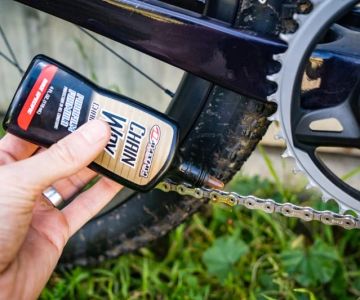
When the chain is fully dry, apply one small drop of suitable lubricant to each roller or follow the product instructions. Rotate the drivetrain to distribute it, allow the specified set time, and wipe the outside of the chain thoroughly. Excess lubricant attracts grit and can migrate toward brakes.
Post-cleaning checklist
- Confirm wheels and axles are correctly installed and secure.
- Squeeze both brakes and check normal lever feel.
- Inspect braking surfaces for oil or cleaner.
- Check tires for pressure, damage, and correct seating.
- Turn the handlebar and confirm cables and hoses move freely.
- Shift through gears in a stand or safe area.
- Wipe excess chain lubricant.
- Check e-bike ports and components are dry before powering or charging.
- Take a slow test ride away from traffic before normal use.
Sources and evidence notes
This article reflects common bicycle manufacturer and professional workshop practice: use mild compatible products, low-pressure water, separate brake and drivetrain tools, protect bearings and electronics, dry thoroughly, lubricate sparingly, and inspect before riding.
Specific care instructions differ by finish, frame material, brake system, chain treatment, suspension, and e-bike design. Use manufacturer manuals and a qualified bicycle mechanic for the exact components.
Frequently asked questions
Can I use dish soap on a bicycle?
Some diluted gentle soaps may be acceptable, but additives and concentrations vary. A bike-compatible wash and manufacturer guidance reduce uncertainty.
Can I use a pressure washer?
Avoid it. High pressure can force water past seals and into bearings, suspension, and electronics.
Should I degrease the chain after every ride?
Usually not. Wipe routine dirt and use a deeper clean when conditions and lubricant instructions call for it.
Why do my disc brakes squeal after washing?
Moisture, contamination, pad condition, or setup may contribute. If braking is weak or noise persists, stop riding and seek qualified service.
Can I wash an e-bike with the battery removed?
Follow the specific manufacturer. Battery and port sealing instructions differ, and exposed contacts must stay protected and dry.
Conclusion and next steps
Check your bicycle and component manuals, then prepare separate clean and drivetrain tools. Use low-pressure water and mild cleaner, keep oil away from brakes, and avoid soaking bearings or electronics. Dry, inspect, lubricate the chain sparingly, and complete the post-cleaning safety check. Routine gentle cleaning makes problems easier to see without creating new ones.

 Bosco Bike Fits4.0 (24 reviews)
 Bike World USA1.0 (30 reviews)
 Palo Alto Bicycles4.0 (384 reviews)
 The Bikery at The Brewery4.0 (145 reviews)
 Union Cycle Center4.0 (120 reviews)
 Cycle Quest4.0 (88 reviews)
 How to Teach Kids to Ride a Bike: A Step-by-Step Guide for Parents
 Tips for Riding on Busy City Streets: Smart Strategies for Urban Cyclists
 Best US National Parks for Mountain Biking: Ride Epic Trails Across America
 Best Aero Helmets for Time Trials and Racing
 How to Clean and Lubricate Your Bike Chain Like a Pro
 10 Must-Have Items for Long-Distance Cycling Trips