
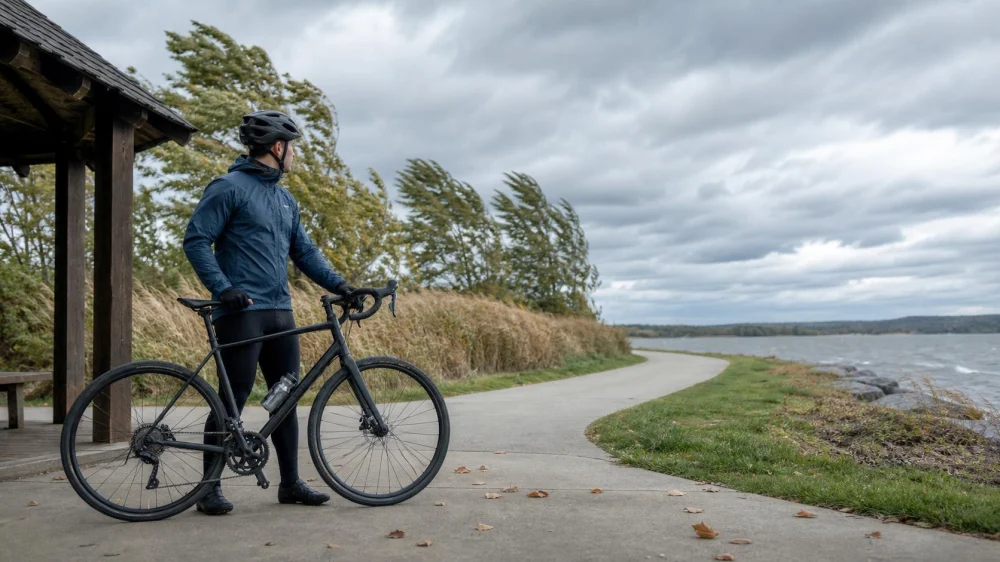
When Is It Too Windy to Ride a Bike Safely?
On this page
- Quick answer
- Why there is no single wind limit
- Read more than the headline forecast
- Evaluate the route and bicycle
- Make a go, modify, or cancel decision
- Checklist if you choose to ride
- Signs to stop riding
- Limitations and important notes
- Frequently asked questions
- Sources and evidence notes
- Choose the safer plan
Quick answer
It is too windy to ride when gusts, crosswinds, debris, visibility, or your ability to hold a predictable line make control uncertain. Do not rely on one wind-speed number. Compare sustained wind and gusts with the route, traffic, exposed bridges, bicycle setup, rider experience, and available exits. If you cannot confidently stay in your space, modify or cancel the ride.
This guide is for everyday cyclists in the United States making a pre-ride safety decision. It cannot set a universal wind limit because control depends on local conditions, equipment, traffic, and the individual rider.
Why there is no single wind limit
Wind reported at a weather station does not describe every point on a route. Buildings, hills, trees, gaps, passing vehicles, and open water can shelter or accelerate air. A manageable headwind on a quiet trail can become a destabilizing crosswind on an exposed bridge.
Sustained wind affects effort and speed over time. Gusts are short increases that can move a rider unexpectedly. The difference between sustained wind and peak gusts matters because abrupt changes are harder to anticipate than a steady flow.
Rider mass and experience, bicycle geometry, luggage, clothing, and wheel depth also affect response. A trailer, child seat, large pannier, loose jacket, or deep-section wheel can present more area to the wind. A number that one rider handles comfortably may be unsuitable for another.
Read more than the headline forecast
Check a current official weather forecast and any local advisories shortly before departure. Review:
- sustained wind and forecast gusts;
- wind direction at the hours you expect to ride;
- thunderstorms, squalls, dust, wildfire smoke, or heavy precipitation;
- rapid changes expected during the return leg; and
- warnings for high wind, falling branches, difficult travel, or hazardous air.
Compare wind direction with the route. A loop can expose you to several angles, while an out-and-back may produce an easy first half and a demanding return. Do not plan distance using normal calm-weather speed when a strong headwind is possible.
Observe conditions outside as well. Moving branches, blowing trash, dust, and unstable roadside signs are practical clues, but they do not replace current alerts. Trees can also hide wind at the start while an open section remains exposed.
Evaluate the route and bicycle
Mark the places where a sudden sideways movement would have serious consequences: narrow shoulders, fast traffic, bridges, ridge lines, open fields, construction zones, steep descents, and areas with falling branches. A protected multiuse path may offer more margin, but debris and trees can still create hazards.
Inspect the bicycle before deciding. Confirm tire condition and pressure are appropriate, wheels are secure and true, brakes operate correctly, bags are firmly attached, and no clothing or straps can flap into moving parts. Do not make untested equipment changes immediately before a difficult ride.
Ask whether you can exit the route easily. A short local loop with frequent turnoffs is easier to reassess than a remote point-to-point ride. For group rides, plan around the least experienced rider and the setup most affected by wind.
Make a go, modify, or cancel decision
Use three clear options:
- Go as planned only when conditions are within your demonstrated control, the route has adequate space, and no relevant warning changes the risk.
- Modify by choosing a shorter, sheltered, lower-traffic route; delaying departure; riding indoors; or removing unnecessary luggage.
- Cancel when official warnings, unstable debris, severe weather, exposed high-consequence sections, or uncertain bike control are present.
Set a reassessment point near the start. If holding a steady line already requires constant correction in a safe, open section, conditions are unlikely to improve on a bridge or descent. Turning back early protects the option to ride another day.
Checklist if you choose to ride
- Use a route with escape options and avoid known exposed hazards.
- Tell someone the route and expected return time when appropriate.
- Keep both hands ready for control and avoid unnecessary one-handed tasks.
- Reduce speed before exposed gaps, descents, and areas where vehicles may create turbulence.
- Allow extra space from curbs, barriers, parked cars, other riders, and traffic.
- Expect gusts when leaving shelter or when large vehicles pass.
- Stay visible and predictable; do not weave in search of shelter.
- Stop in a safe place to adjust clothing, navigation, or luggage.
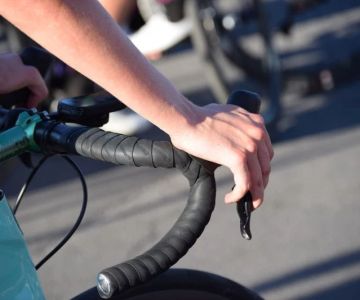
Avoid gripping the handlebar so rigidly that every gust creates an abrupt steering input. At the same time, do not treat relaxed control as a technique that can overcome conditions beyond your skill or safe road space.
Signs to stop riding
End or pause the ride if you cannot maintain a predictable line, are repeatedly pushed toward traffic or an edge, encounter falling branches or airborne debris, lose needed visibility, or feel that steering and braking are no longer dependable.
Also stop if fatigue is reducing coordination. A headwind can make the return much slower and more demanding than planned. Find a safe location away from traffic and falling-object hazards, then use a planned bailout or arrange transportation.
During lightning, severe storms, or an official instruction to seek shelter, follow current emergency guidance. Do not shelter under a lone tree or remain on an exposed ridge simply to protect the bicycle.
Limitations and important notes
- Forecast values may differ from conditions on bridges, passes, waterfronts, streets between tall buildings, and exposed slopes.
- Deep wheels, trailers, child carriers, cargo, and large bags can change wind response.
- Children and inexperienced riders may need a more conservative decision.
- Indoor trainers and stationary bikes avoid road wind but have their own setup, ventilation, and supervision needs.
- Local authorities, land managers, event organizers, and emergency alerts take priority over general online advice.
Frequently asked questions
What wind speed is unsafe for cycling?
No single speed is safe or unsafe in every situation. Gusts, direction, route exposure, traffic space, bicycle setup, warnings, and rider control must be considered together.
Are headwinds safer than crosswinds?
A steady headwind may disturb steering less than a crosswind, but it can greatly increase effort and delay the return. Wind direction can also change as the route turns or passes through gaps.
Should I lower tire pressure for wind?
Do not make an arbitrary pressure change to solve wind. Use a pressure appropriate for the tire, bicycle, load, surface, and manufacturer guidance. Wind control is primarily a route and go/no-go decision.
Can I ride behind another cyclist to avoid the wind?
Drafting changes effort but requires group skills, communication, and safe spacing. It does not remove gusts or crosswinds and may be inappropriate in traffic or for riders without experience.
Is a heavier bike always more stable?
Weight alone does not determine control. Bicycle geometry, wheel and luggage profile, speed, wind angle, rider skill, and road space all matter.
Sources and evidence notes
The decision framework reflects common cycling and weather-safety practice: consult current forecasts and warnings, evaluate route exposure, allow control space, make conservative decisions for gusts and debris, and establish bailout options. Current official weather services and local authorities provide the relevant conditions for a particular ride.
Choose the safer plan
Before your next windy ride, compare the gust forecast and direction with the route's most exposed section. Choose a nearby reassessment point and a sheltered alternative. If you cannot describe how you will avoid or exit the highest-consequence section, select the alternative before departure.


 Pedego Electric Bikes Tampa4.0 (110 reviews)
 Cadence Cyclery of Encinitas4.0 (277 reviews)
 Cruiser Bikes New York0.0 (0 reviews)
 Budget Pro Bicycles4.0 (112 reviews)
 Kreb Cycle Eastport4.0 (56 reviews)
 Bucephalus Bikes4.0 (122 reviews)
 How to Teach Kids to Ride a Bike: A Step-by-Step Guide for Parents
 Tips for Riding on Busy City Streets: Smart Strategies for Urban Cyclists
 Best US National Parks for Mountain Biking: Ride Epic Trails Across America
 Best Aero Helmets for Time Trials and Racing
 How to Clean and Lubricate Your Bike Chain Like a Pro
 10 Must-Have Items for Long-Distance Cycling Trips