
- 1-Understanding-Fork-Pressure
- 2-Tools-and-Preparation
- 3-Step-by-Step-Adjustment
- 4-Testing-and-Fine-Tuning
- 5-Common-Mistakes-to-Avoid
- 6-Real-Life-Adjustment-Stories
1. Understanding Fork Pressure and Its Importance
Adjusting suspension fork pressure correctly is essential for both comfort and performance. The fork pressure, often referred to as “air pressure” or “sag,” controls how the suspension reacts to bumps, jumps, and rough terrain. Incorrect pressure can lead to harsh impacts, reduced control, and even damage to the fork over time.
Experienced riders often recommend starting with the manufacturer’s recommended pressure range and then fine-tuning based on rider weight, terrain, and riding style. Understanding how sag percentages affect handling will make adjustments more precise and effective.
2. Tools and Preparation Before Adjustment
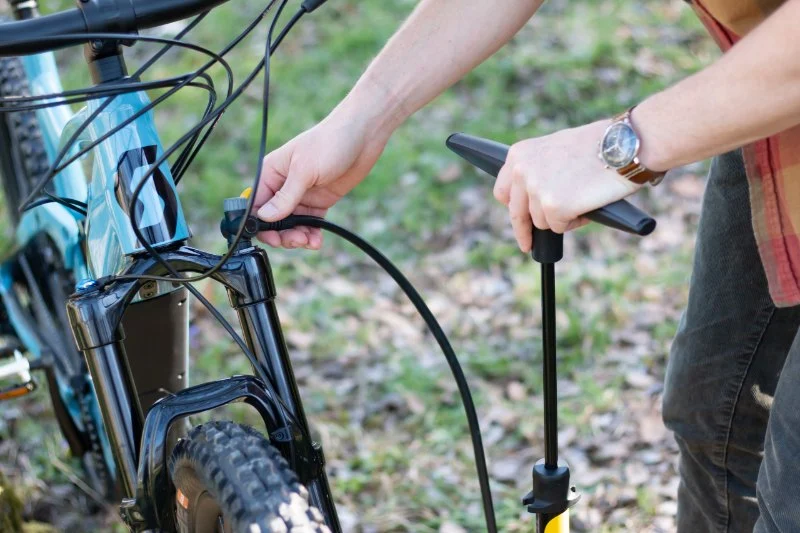
Before adjusting your suspension fork, you need the right tools and preparation. A high-quality shock pump is essential to accurately measure air pressure. Ensure your bike is on a stable surface and the fork is clean to prevent contamination. Wearing gloves can also protect your hands from grease or dirt during adjustment.
Additionally, make a note of your current fork pressure and any previous settings. This will allow you to return to a baseline if the new adjustments don’t provide the desired feel.
3. Step-by-Step Adjustment for Optimal Performance
Start by checking your current sag: sit on the bike in riding gear and measure how much the fork compresses under your weight. Most mountain bikes perform best with 20-30% sag. Use the shock pump to increase or decrease air pressure gradually. Small adjustments, typically 5-10 psi at a time, help you find the perfect balance without overshooting.
Remember, both compression and rebound settings affect performance. Adjusting air pressure is just one part of the complete tuning process to achieve smooth, responsive suspension.
4. Testing and Fine-Tuning Your Suspension
After initial adjustments, take your bike for a test ride on terrain similar to your usual trails. Pay attention to how the fork responds to bumps and corners. Fine-tune pressure incrementally, and observe both comfort and control. Keep notes on changes to replicate successful setups in the future.
For riders unsure about optimal settings, Cycling Guider provides expert advice and product recommendations to ensure the suspension fork delivers peak performance without unnecessary trial and error.
5. Common Mistakes to Avoid
Many riders make errors such as over-inflating or under-inflating the fork, skipping sag measurement, or ignoring terrain type. Avoid adjusting pressure in large jumps, as this can lead to unstable performance. Always double-check your settings and remember that small, gradual changes produce the best results.
6. Real-Life Adjustment Stories and Tips
John, a mountain biker in Colorado, initially struggled with a harsh front fork that caused fatigue on long rides. By carefully following sag measurement techniques and gradually adjusting the air pressure, he achieved a smoother ride that enhanced control and comfort. Within a few sessions, John noticed better handling on technical trails and fewer impacts on his wrists and shoulders.
For those seeking more guidance, Cycling Guider offers step-by-step tutorials and recommended equipment to help riders adjust suspension fork pressure correctly, making every ride safer and more enjoyable.





 Village Bicycle Shop4.0 (95 reviews)
 pXcycle4.0 (74 reviews)
 GGV Bicycles5.0 (1 reviews)
 Bicycle World4.0 (79 reviews)
 The Bicycle3.0 (63 reviews)
 EBike Connections - Fairfax County, VA0.0 (0 reviews)
 How to Teach Kids to Ride a Bike: A Step-by-Step Guide for Parents
 Tips for Riding on Busy City Streets: Smart Strategies for Urban Cyclists
 Best US National Parks for Mountain Biking: Ride Epic Trails Across America
 Best Aero Helmets for Time Trials and Racing
 How to Clean and Lubricate Your Bike Chain Like a Pro
 10 Must-Have Items for Long-Distance Cycling Trips