
- 1 - Understanding Knee Pain in Cycling
- 2 - The Role of Cleat Position in Knee Pain
- 3 - How to Adjust Your Cleats to Avoid Knee Pain
- 4 - Additional Tips for Avoiding Knee Pain
- 5 - Why Choose Cycling Guider for Gear and Advice
1 - Understanding Knee Pain in Cycling
Knee pain is a common issue faced by cyclists, and it can significantly impact your performance and comfort. The repetitive motion of pedaling places a lot of strain on the knees, and if your bike setup is incorrect, this can lead to pain, discomfort, and even long-term damage. Knee pain from cycling is often referred to as "cyclist’s knee" and can manifest in different ways, such as sharp pain, dull ache, or swelling around the knee joint.
Several factors contribute to knee pain in cyclists, including improper saddle height, incorrect pedal alignment, and most notably, the cleat position. Adjusting your cleats correctly can help reduce knee strain, improve pedaling efficiency, and prevent injuries. In this article, we’ll explain how the cleat position can affect knee pain and provide tips for adjusting it properly.
2 - The Role of Cleat Position in Knee Pain
Your cleats are the connection between your cycling shoes and the pedals. When placed incorrectly, cleats can force your knees into unnatural angles during pedaling, which increases the risk of strain and injury. The position of your cleats affects the alignment of your legs, how your knees track during pedaling, and the distribution of pressure across the joints.
Inappropriate cleat position can lead to several knee problems, such as patellofemoral pain syndrome, iliotibial band syndrome, or excessive knee rotation. For example, if your cleats are too far forward or too far back, they can alter the angle at which your knee moves during each pedal stroke, causing discomfort and pain over time. Understanding how to adjust your cleats properly is crucial for preventing knee pain and ensuring a comfortable cycling experience.
3 - How to Adjust Your Cleats to Avoid Knee Pain
Now that you understand the importance of cleat positioning, let’s take a closer look at how to adjust your cleats to avoid knee pain:
1. Position Cleats Properly on the Shoe
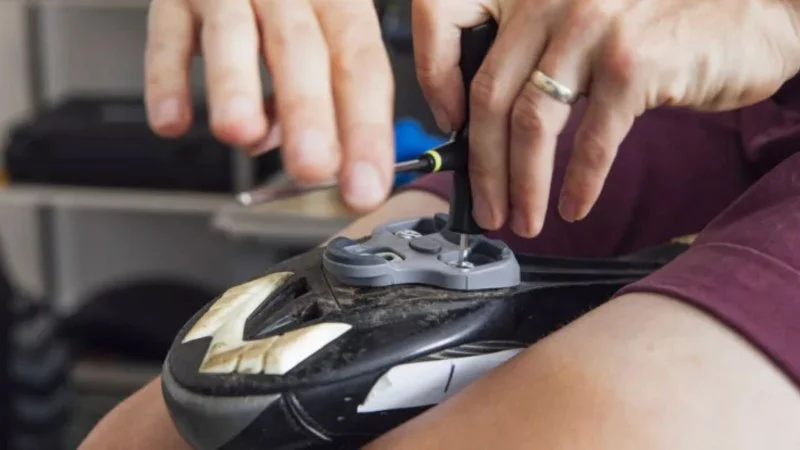
The first step is to ensure your cleats are positioned correctly on your cycling shoes. Most cycling shoes have adjustable cleat positions that allow you to move the cleats forward, backward, inward, or outward. It’s essential to align the cleat with the ball of your foot for proper pedaling mechanics. If your cleat is positioned too far forward or backward, it can change the angle at which your foot and knee move, leading to increased pressure on the joints.
2. Adjust Cleat Float to Match Your Natural Pedaling Motion
Cycling cleats come with different degrees of “float,” which refers to the amount of rotation allowed in the foot while clipped into the pedal. If your cleats are too stiff, they may restrict the natural motion of your knee, causing pain. On the other hand, too much float can lead to instability in your pedaling motion. Aim for a float setting that allows for a slight movement of the foot (usually between 4-9 degrees), mimicking your natural knee and foot alignment.
3. Set Cleats to Avoid Excessive Knee Rotation
When adjusting your cleats, make sure they are aligned in such a way that your knees don’t rotate excessively during each pedal stroke. This is especially important for preventing knee pain related to excessive inward or outward knee movement. The ideal cleat position will allow your knees to track straight in line with your pedals, reducing unnecessary strain.
4. Fine-Tune After Test Rides
After making initial adjustments to your cleats, take your bike for a test ride. Pay attention to how your knees feel during the ride, and make further adjustments as needed. It may take some trial and error to find the perfect cleat position for your body, so be patient and make small changes to improve comfort.
4 - Additional Tips for Avoiding Knee Pain
Aside from adjusting your cleat position, there are several other tips that can help prevent knee pain while cycling:
1. Correct Saddle Height
Incorrect saddle height is another common cause of knee pain in cyclists. If your saddle is too high or too low, it can lead to excessive knee movement or overextension during each pedal stroke. Make sure your saddle is at the right height so that your knee is slightly bent at the bottom of the pedal stroke.
2. Strengthen Your Leg Muscles
Weak leg muscles, particularly the quadriceps and hamstrings, can contribute to knee pain. Strengthening these muscles through exercises like squats, lunges, and leg presses can help improve your pedaling efficiency and reduce the strain on your knees while cycling.
3. Warm-Up and Cool Down
Warming up before your ride and cooling down afterward are important for preventing knee pain. Stretching your quads, hamstrings, and calves can help improve flexibility and reduce muscle stiffness, allowing for smoother pedal strokes and better overall knee health.
5 - Why Choose Cycling Guider for Gear and Advice
If you’re serious about optimizing your cycling experience and preventing knee pain, Cycling Guider is here to help. We offer expert advice on bike setup, including cleat adjustments, saddle positioning, and other crucial aspects of your cycling posture. Additionally, we provide a wide range of cycling gear and accessories to ensure your ride is as comfortable and efficient as possible. Visit us today to find the best products and expert guidance to improve your cycling performance and prevent knee pain.
 TUNE Cycles4.0 (102 reviews)
 Alan Gorman Bicycle Specialist5.0 (224 reviews)
 The Cosmic Wheel4.0 (254 reviews)
 Bumstead's Bicycles4.0 (129 reviews)
 Davis Bike Exchange3.0 (61 reviews)
 Electric Trike5.0 (20 reviews)
 How to Teach Kids to Ride a Bike: A Step-by-Step Guide for Parents
 Tips for Riding on Busy City Streets: Smart Strategies for Urban Cyclists
 Best US National Parks for Mountain Biking: Ride Epic Trails Across America
 Best Aero Helmets for Time Trials and Racing
 How to Clean and Lubricate Your Bike Chain Like a Pro
 10 Must-Have Items for Long-Distance Cycling Trips