
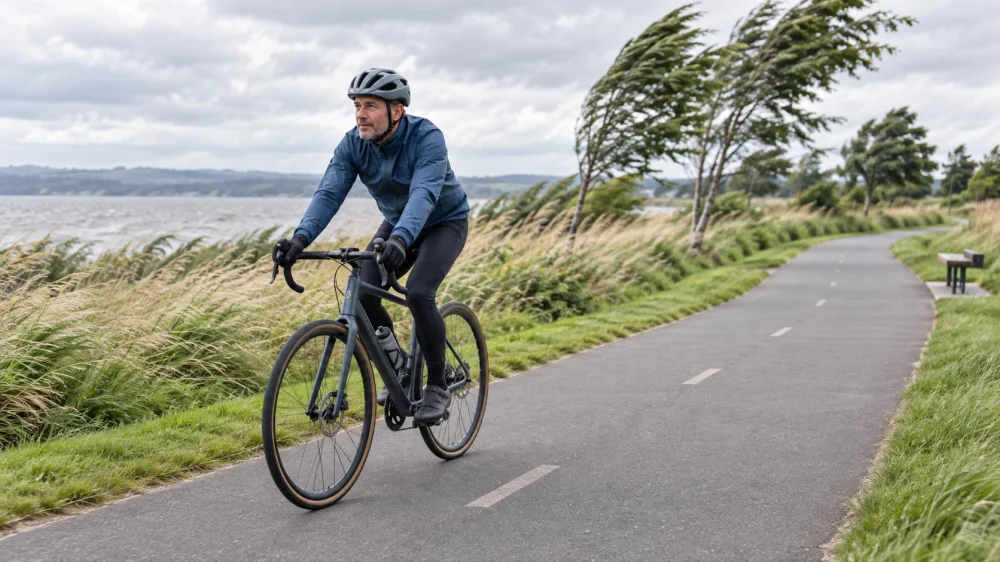
Cycling in Strong Wind: Route, Posture, and Stop Rules
On this page
Quick answer
Before cycling in strong wind, check current alerts, wind direction, gusts, and the route's exposed sections. Shorten or move the ride when control could be compromised. Keep both hands ready, use a stable line, leave extra space, and expect sudden crosswinds near gaps, bridges, and large vehicles. Stop in a safe place if gusts move you unpredictably or debris begins falling.
Check the forecast and redesign the route
Wind risk depends on more than a single speed number. Gusts, direction, terrain, trees, traffic, rider skill, bicycle type, and the difference between forecast and local conditions all matter. Use current official weather alerts and a detailed forecast near departure, then look outside before committing.
Map where the route is exposed: bridges, waterfronts, ridgelines, open farmland, canyon exits, gaps between buildings, and roads with fast traffic. A protected route may be more manageable even when it is shorter or less scenic. Plan a turnaround point and places where you can leave the road without standing under damaged trees, signs, or power lines.
- Choose lower-speed streets or protected paths when their operating rules and surface are suitable.
- Avoid a route that forces a long exposed return after fatigue builds.
- Account for a headwind on the return rather than assuming today's direction will remain constant.
- Identify transit, pickup, or shelter options before the ride.
- Tell a reliable contact about the route when conditions are uncertain.
Prepare the bike and reduce loose gear
Perform an ordinary pre-ride check with extra attention to steering, wheels, brakes, and attachments. Confirm that the handlebar and stem are secure, tires are in good condition and inflated within the maker guidance, wheel fasteners are engaged, and brakes operate before reaching traffic.
Remove or secure loose clothing, bags, rain covers, maps, flags, and dangling straps. Large panniers, deep-section wheels, cargo, and high-profile accessories can change how the bicycle reacts to crosswinds. Do not improvise a new load arrangement immediately before a difficult ride.
Wear a correctly fitted helmet and visible clothing suited to the temperature. Wind chill can make the ride colder than expected, while hard effort into a headwind can cause overheating. Carry a layer and keep it secured. Eye protection may help with dust, but it must not restrict vision.
Ride predictably in headwinds and crosswinds
Use a stable position that keeps steering control available. Relax the upper body, keep a firm but not rigid grip, and avoid sudden corrections. Select an easier gear and a sustainable effort into a headwind; speed may drop sharply even while effort rises.
Crosswinds can arrive suddenly when you leave the shelter of a wall, hedge, tree line, parked vehicle, or building. They can also change when a truck or bus passes. Look ahead for these transitions, reduce speed before them, and leave lateral room without moving unpredictably into another traffic path.
Keep both hands on the handlebar when control is uncertain. Avoid eating, filming, adjusting clothing, or reaching for a bottle during a gusty exposed section. If a gust moves you, focus on a smooth correction and a predictable line rather than oversteering.
Manage traffic, passing, and group spacing
Follow local traffic laws and path rules. Wind noise can hide approaching vehicles and verbal warnings, so increase visual checks without making a sudden turn. Signal only when you can maintain control, and do not assume another road user understands why your line needs more space.
Large vehicles can produce pressure changes and turbulence. Avoid riding alongside one longer than necessary, keep a controllable line, and be prepared for the wind to change as it passes. If the lane or shoulder leaves no safe margin, use a safer route or wait in a protected legal location.
In a group, discuss pace, gaps, regroup points, and the rule for stopping before departure. Do not overlap wheels or use a close formation unless every rider has the skill and the conditions support it. Give less experienced riders room to react, and communicate hazards early.
Set clear stop and shelter conditions
Decide before riding what will trigger a change. Stop or leave the route when gusts repeatedly move the bicycle outside a controllable line, visibility is reduced by dust or precipitation, branches or objects are falling, lightning is present, a warning escalates, or fatigue prevents reliable steering.
Choose shelter carefully. Do not wait beneath damaged trees, unstable structures, signs, or power lines. Move off the travel path and make sure the bicycle cannot blow into traffic. Walking may not be safer on an exposed bridge or narrow shoulder; turn around or seek help before reaching that point.
Weather can exceed a forecast. There is no universal wind speed that is safe for every rider and route. A beginner, a child, a cargo bike, a lightweight rider, or a rider with balance or health limitations may need a much earlier stop decision. Emergency conditions require local emergency services, not continued riding.
Frequently asked questions
Is a headwind safer than a crosswind?
A headwind may be more predictable, but it can cause fatigue and slow progress. Crosswinds can affect lateral control. Either can become unsafe depending on gusts, traffic, terrain, and the rider.
Should tire pressure be lowered for wind?
Do not guess. Use the tire and bicycle maker guidance and account for rider and cargo load. Incorrect pressure can create other handling or rim risks.
Are deep-section wheels harder in crosswinds?
They can react differently to crosswinds, but the effect depends on design, rider, and conditions. Seek manufacturer or experienced shop guidance rather than experimenting in severe weather.
Can I shelter behind another cyclist?
Close drafting requires skill and clear agreement. Gusts make wheel overlap and sudden movement more hazardous, so increase spacing when riders are not experienced together.
What should I check after a windy ride?
Inspect the bicycle for debris, loose attachments, wheel or tire damage, and anything affected by a fall or strike. Clean and repair according to manufacturer guidance before the next ride.
Conclusion and next steps
Check alerts, gusts, direction, and exposure before leaving. Choose a protected route, secure the bicycle and gear, ride with smooth control, and leave extra space around traffic and other cyclists. Most importantly, set a conservative stop rule in advance. A shortened or canceled ride is a successful decision when wind removes the margin needed for predictable control.

 Trek Bicycle East Northport5.0 (521 reviews)
 NW Ambush Extreme Sports4.0 (149 reviews)
 GC Performance Coaching4.0 (5 reviews)
 OC Bikes E-bikes Sales, Service and RENTAL4.0 (15 reviews)
 Garrison's Cyclery4.0 (201 reviews)
 Pete's Bicycle Shop4.0 (107 reviews)
 How to Teach Kids to Ride a Bike: A Step-by-Step Guide for Parents
 Tips for Riding on Busy City Streets: Smart Strategies for Urban Cyclists
 Best US National Parks for Mountain Biking: Ride Epic Trails Across America
 Best Aero Helmets for Time Trials and Racing
 How to Clean and Lubricate Your Bike Chain Like a Pro
 10 Must-Have Items for Long-Distance Cycling Trips